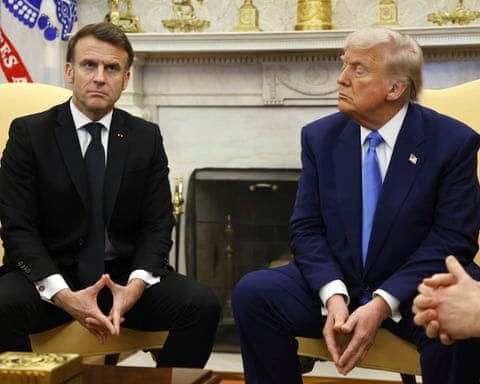
The American president has publicly rebuked key European nations for their refusal to participate in or facilitate military operations in the Gulf, escalating a diplomatic rift within traditional Western alliances. The comments, made via social media and to reporters, centered on the strategic Strait of Hormuz and the flow of global energy supplies.
In his statements, the president suggested that nations concerned about fuel prices and supply security should “go get your own oil,” implying they should use military force to secure the vital waterway themselves. He further stated that the responsibility for keeping the strait open “will rest with countries that rely on it,” signaling a potential shift in longstanding U.S. security commitments in the region.
This rhetoric comes amid tangible actions by several European capitals to distance themselves from the ongoing conflict. Reports indicate that France recently blocked aircraft transporting military supplies from using its airspace, while Italy denied last-minute landing rights to U.S. military aircraft at a base in Sicily, citing procedural requirements. Spain has also formally denied the use of its bases and airspace for the conflict, with its defense minister stating the country does not “accept lectures from anyone” regarding its commitment to peace.
The public friction extends to the United Kingdom, which has permitted the use of its bases for operations its own government has deemed illegal. Despite this support, the UK was singled out by a senior U.S. defense official, who questioned the readiness of the Royal Navy to secure the Strait of Hormuz.
The conflict, now in its second month, has triggered significant global economic disruption, with leaders citing a severe oil supply shock. While the U.S. administration has stated that operations will conclude “very soon” and that negotiations are ongoing, the path to a ceasefire remains uncertain. Recent remarks from the Iranian president indicated a conditional willingness to end hostilities, which prompted a temporary dip in global oil prices.
On the ground, military activity continues. U.S. airstrikes reportedly targeted sites within Iran, including near a major nuclear facility, while Iranian forces have attacked commercial shipping in the Gulf. The human cost is mounting, with thousands reported killed.
The public divergence among NATO allies raises profound questions about the future of transatlantic security cooperation. A senior U.S. diplomat hinted at a post-conflict reassessment of the alliance, questioning whether it has become a “one-way street” for American defense guarantees.
As the war persists, the blend of military stalemate, economic pressure, and diplomatic fracture presents a complex challenge for Western leaders, with no swift resolution in sight.