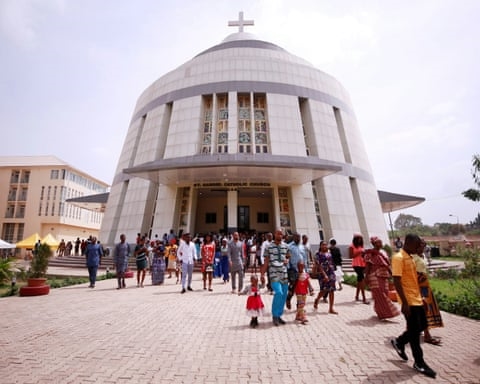
On Christmas Day, the United States launched a series of military strikes in northern Nigeria, targeting positions held by militants affiliated with the Islamic State. The action represents a significant overseas military engagement by the current U.S. administration, which had previously emphasized a policy of disengagement from prolonged foreign conflicts.
In a public statement, the U.S. President framed the operation as a direct response to what was described as a severe and escalating threat against Christian communities in the region. The announcement asserted that extremist groups were carrying out targeted violence against Christians “at levels not seen for many years.”
According to defense officials, the strikes were conducted in coordination with and with the approval of the Nigerian government. Authorities in Abuja confirmed the joint operation, highlighting collaboration on intelligence and strategy, while carefully avoiding any endorsement of the religious persecution narrative presented from abroad.
The issue of violence against Christians in Nigeria has been a persistent focus for certain political factions in the United States, where it has served as a rallying point. This has led to sustained pressure on the Nigerian government, including recent legislative efforts to impose sanctions and an official U.S. designation of Nigeria as a country of particular concern regarding religious freedom. Planning for potential military options was reported to have been underway for months.
The Nigerian government, however, has consistently pushed back against the characterization of its security crisis as primarily sectarian. Officials argue that the violence plaguing the nation is complex and affects citizens of all faiths. They point to a multifaceted security landscape where extremist insurgencies in the northeast and widespread criminal kidnappings for ransom in the northwest victimize Muslim and Christian communities alike.
Analysts note that while attacks on churches and religious figures draw intense international scrutiny, the drivers of violence are often intertwined with competition over resources, ethnic tensions, and criminal enterprise, rather than purely religious ideology. Deadly conflicts between herders and farmers, for instance, are fundamentally rooted in land and water scarcity, though they frequently unfold along communal lines.
In its official response to the Christmas Day strikes, Nigeria’s foreign ministry praised the security partnership but pointedly refrained from echoing the U.S. rationale. A government statement emphasized that “terrorist violence in any form, whether directed at Christians, Muslims or other communities, remains an affront to Nigeria’s values,” underscoring a national commitment to secular governance and constitutional protections for all faiths.
The operation highlights the ongoing challenge for Nigeria’s leadership in addressing a pervasive security deterioration that has resulted in thousands of deaths and kidnappings in recent years, even as it navigates complex international perceptions of the conflict’s nature.