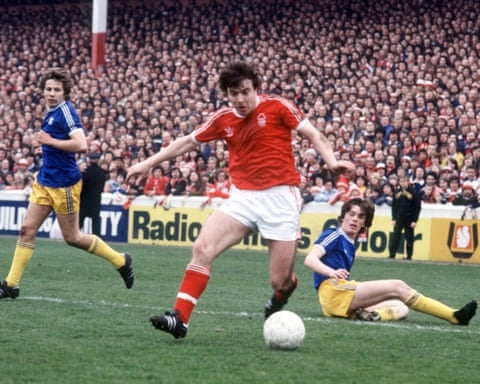
The football world mourned the loss of a true original on Christmas Day with the passing of John Robertson at 72. While his name may not echo with the same volume as some contemporaries in the annals of Scottish football history, those who played with him, were coached by him, or witnessed his artistry know a unique talent has left us.
Robertson’s story is one of transformation. Early in his career at Nottingham Forest, he was, by his own manager’s later admission, a “scruffy, unfit” prospect with a lifestyle to match. It was the legendary Brian Clough who saw the diamond in the rough, shifting him from midfield to the left flank and demanding a new professionalism. The result was a player who became the creative heartbeat of a European champion. Robertson was not a traditional flying winger but a masterful outside-left, blessed with a devastating left foot, a deceptive change of pace, and a cross of pinpoint accuracy. He was instrumental in Forest’s back-to-back European Cup triumphs, providing the assist for the winner in 1979 and scoring the only goal in the 1980 final.
Yet, for all his club glory, his international career with Scotland—yielding 28 caps and appearances in two World Cups—often feels like an undersold chapter. In an era rich with Scottish attacking talent, his subtle, intelligent style perhaps never received the full acclaim it warranted at home, a sharp contrast to his iconic status in Nottingham.
His second act, as a coach, cemented his reputation as a footballing sage. For years, he served as the trusted lieutenant to Martin O’Neill, forming a formidable partnership at clubs like Leicester City, Celtic, and Aston Villa. His strength was a rare blend of tactical knowledge and straight-talking man-management. He commanded respect without pretence, becoming a mentor to a generation of players. Stories abound of seasoned professionals being humbled in training drills by the older coach’s undiminished technique and vision.
Robertson’s life was marked by profound personal tragedy, including the loss of his brother and, later, his young daughter. He carried these burdens with a quiet dignity, rarely speaking of them publicly. A brief, regretful move to Derby County later in his playing career, which caused a famed rift between Clough and his assistant Peter Taylor, was a difficult period overshadowed by family concerns.
In the end, John Robertson’s legacy is dual-faceted: the scruffy genius who became Clough’s on-field maestro, and the astute, beloved coach who operated in the shadows, shaping winners. He was a man who made the extraordinary look simple and whose influence, though sometimes understated, was deeply felt across generations of the game. For Nottingham Forest, he remains an immortal hero. For football, he was a one-of-a-kind intellect.