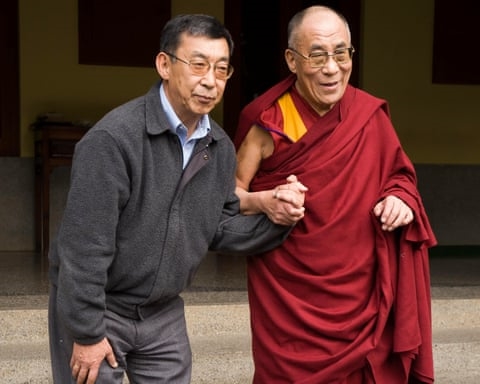
Tendzin Choegyal Taklha, a pivotal figure in the orbit of the Tibetan spiritual leader, has passed away at the age of 79. For decades, he served as a trusted advisor and steadfast supporter to his elder brother, playing a crucial role as the latter’s influence evolved from a national to a global scale.
Identified in infancy as a significant reincarnate lama, Taklha chose a secular path after his family went into exile when he was 13. At his brother’s direction, he was educated at a Jesuit-run school in Darjeeling, an experience that provided him with a deep understanding of Western perspectives. This knowledge later proved invaluable in advising on international engagements.
Born in Lhasa during a traditional festival, he was the youngest child in a family whose status was elevated when an older sibling was recognized as a previous Dalai Lama. Taklha’s own early recognition carried a unique personal narrative; he was also believed to be the rebirth of a brother who died in infancy, a connection he would later regard with a mix of humor and skepticism.
His early years in Lhasa were those of a privileged youth, marked by rebellious antics, before a brief and disliked stint in monastic training. The political landscape shifted dramatically during his childhood with increasing external influence in the region. As a young boy, he accompanied his brother on a diplomatic visit, where his unfiltered comments in a newly acquired language reportedly caused consternation.
In 1959, as tensions culminated, he was retrieved from his monastery to join his brother’s perilous escape from Lhasa. The group evaded capture, undertaking a grueling journey over the Himalayas to reach India. For the teenage Taklha, a symbol of this new chapter was the responsibility of carrying a pistol for protection.
His education in Darjeeling at a Catholic institution made a profound impression, even leading him to participate in its religious services. He maintained a discreet correspondence with his brother, who used a pseudonym. Fluent in English and well-read, Taklha later pursued studies in North America before returning to teach at a Tibetan school in Dharamsala, where he met his future wife.
His life took a martial turn when he joined a specialized unit of the Indian army, rising to the rank of captain. Returning to civilian duties, he served in his brother’s administrative office and was later elected to a political assembly representing a Tibetan province.
In his later years, Taklha became a key interlocutor for the growing number of international visitors seeking wisdom in Dharamsala, effectively bridging disparate cultures. He was a constant companion on global travels, offering counsel and, when necessary, a dissenting viewpoint. Despite his reluctance and a lifelong ambivalence toward his own formal religious status, he emerged as a respected speaker on Buddhist thought and deepened his personal practice in his final decade.
He is survived by his wife, two children, a sister, and his elder brother.