The holiday season is a time when personal and collective traditions converge, and nowhere is this more evident than in the meals we share. The dishes that grace our tables are more than sustenance; they are edible archives of family history, migration, and community.
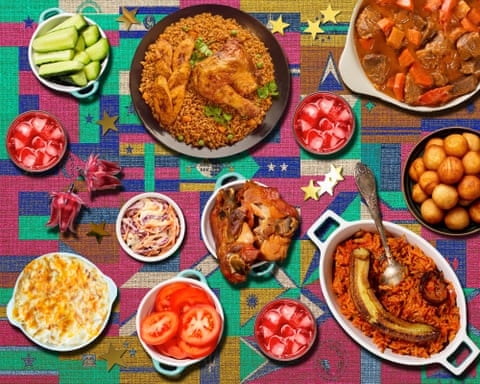
Consider the Christmas spread in a Nigerian home. While each family has its own customs, certain celebratory staples are almost universal. You will likely find generous portions of fried plantains, coleslaw, and an assortment of appetizers known affectionately as “small chops.” The centerpiece often involves rice—both fried and the iconic jollof—accompanied by poultry or meat. The influence of history is present, too, with some families incorporating a turkey, a legacy of colonial times.
Neighboring Ghana presents a similar, vibrant picture. A perfectly roasted chicken might serve as the main event, accompanied by rich, peppery stews. A notable distinction across West Africa is the “party jollof,” a festive version of the everyday dish, prized for the distinctive smoky flavor achieved by cooking outdoors over an open flame. These hearty mains are often balanced by elaborate, mixed salads featuring everything from fresh vegetables to proteins like sardines or corned beef, all generously dressed.
For members of the Black British community, the holiday table becomes a fusion of landscapes. Alongside classic British roast accompaniments, dishes like macaroni and cheese, rice and peas, and plantains offer a cherished connection to heritage. These foods celebrate a dual identity, honoring both a present home and ancestral roots.
This connection through cuisine spans oceans. In Brazil, cassava—a root integral to West African cooking—reappears as farofa, a toasted flour mixture often stuffed into the Christmas turkey. It’s a direct culinary lineage, a taste of history adapted to a new environment.
The celebration often concludes with a symbolic drink found across the African diaspora: vibrant, ruby-red beverages made from hibiscus. Known as sorrel in the Caribbean, sobolo in Ghana, zobo in Nigeria, and agua de Jamaica in Latin America, this drink’s journey mirrors that of the people who cherish it. Originally from Africa, the hibiscus plant was carried across the Atlantic centuries ago. Today, its tart, spiced infusion, often sweetened and sometimes spiked with spirits, is a festive staple, a liquid thread connecting celebrations from Accra to Atlanta.
It is crucial to recognize that the deep-seated human need to gather and feast around significant dishes predates modern holiday observances. From pre-colonial harvest festivals in West Africa to vibrant cultural parades in the Caribbean, community has always been built and reinforced around shared food. The holiday season, in all its varied expressions, simply continues this ancient, fundamental tradition. What we eat and with whom we share it remains a powerful testament to who we are and where we come from.