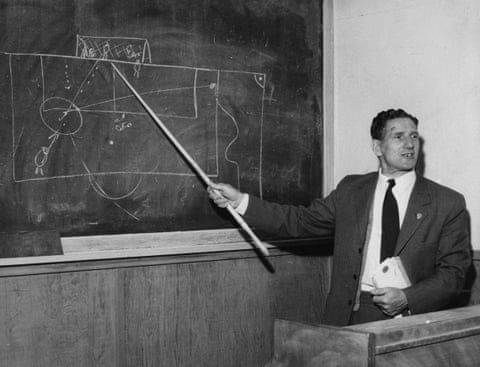
The path to footballing immortality is rarely a straight line, and for one English coach, it led not to the dugouts of his homeland, but to the heart of Scandinavia. After facing repeated rejection from clubs in England, his playing career in the lower leagues seen as a mark against him, an opportunity arose in 1946 that would change his life and the destiny of Swedish football. With little more than self-taught tactical theories and a stint as a wartime PT instructor on his CV, George Raynor accepted a post with the Swedish Football Association, embarking on a journey that would make him a national hero abroad, yet leave him overlooked at home.
His task was formidable. Swedish football was staunchly amateur, governed by a selection committee. Yet, Raynor’s innovative ideas quickly took root. He instilled organisation and a competitive edge, moulding a team that pushed England close in a 1947 friendly. The breakthrough came at the 1948 London Olympics, where he masterminded Sweden’s gold medal triumph. His system, built on a robust midfield, unleashed the legendary ‘Gre-No-Li’ forward line of Gren, Nordahl, and Liedholm. This success, however, came with a cost: Sweden’s strict amateur code immediately ruled out these new stars once they turned professional abroad.
Undeterred by losing his best players, Raynor’s tactical acumen kept Sweden competitive on the world stage. He guided a rebuilt side to a credible third place at the 1950 World Cup in Brazil. A keen student of the game, he meticulously analysed the era’s great teams, most notably the magnificent Hungary side of the early 1950s. His study yielded a tactical plan that earned Sweden a draw in Budapest, insights he reportedly shared, to no avail, with the England management before their historic defeat to the same opponents.
Raynor’s crowning achievement came on home soil. Returning to the national team job in 1957 after brief club spells in Italy and England, he benefited from Sweden’s relaxation of its amateur rules for the 1958 World Cup. He expertly blended returning professionals with domestic talent, crafting a team that marched to the final, defeating powers like West Germany and the Soviet Union along the way. Although they ultimately fell 5-2 to a brilliant Brazilian side featuring a young Pelé, reaching the final was a monumental feat.
He thus became the first English manager to contest a World Cup final, a record that stands to this day. Surely, he thought, this unprecedented international CV would finally open doors back in England. The call never came. The only offer was from non-league Skegness Town. After subsequent short spells, his coaching career faded out in England’s lower divisions.
In Sweden, he was revered, honoured by the King and later inducted into their Football Hall of Fame. In England, he was forgotten—a visionary whose success in adopting and adapting to European football fell on deaf ears in an insular football culture. His story remains one of football’s great paradoxes: the Englishman who built a European powerhouse, only to be written out of his own nation’s footballing history.