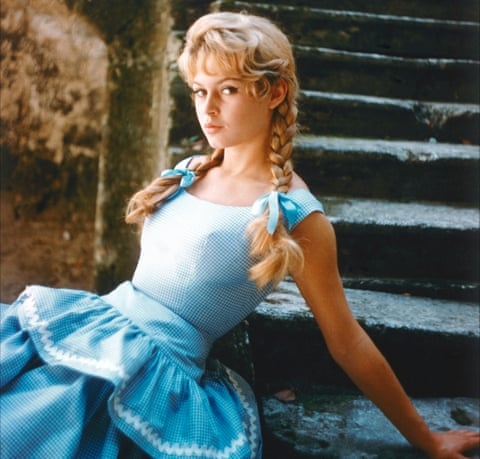
For decades, her name was synonymous with a certain idea of France—a potent blend of allure, rebellion, and modernity. Brigitte Bardot was not merely an actress; she became a cultural phenomenon, a symbol of liberation whose image captivated the world long before the seismic shifts of the sexual revolution and the French New Wave fully took hold. Her career, however, unfolded in the shadow of intense public scrutiny, a narrative often dominated by sensationalism that risks obscuring a genuinely compelling filmography.
Emerging in the mid-1950s, Bardot’s impact was immediate and profound. Her role in the 1956 film And God Created Woman marked a definitive moment, presenting a vision of youthful, unabashed sensuality that challenged conservative norms, particularly abroad. With her distinctive style and charismatic screen presence, she represented a new kind of star—one that resonated as a powerful export of French culture during that era.
While frequently cast in lighthearted roles, Bardot also collaborated with significant directors on more ambitious projects. She worked with Louis Malle on Private Life (1961), a film that presciently explored the corrosive nature of celebrity. Her participation in Jean-Luc Godard’s Contempt (1963) remains a subject of analysis, with the film’s use of her image critiquing the machinery of cinema itself. A more playful nod to her iconic status came from director Agnès Varda, who cleverly referenced Bardot’s pervasive fame in Le Bonheur (1965).
Among her most notable dramatic performances is The Truth (1960), directed by Henri-Georges Clouzot. In this intense courtroom drama, Bardot delivered a powerful portrayal of a woman on trial, her performance building to a climactic denunciation of societal hypocrisy. Another standout is In Case of Emergency (1958), a gripping crime story where she starred opposite the legendary Jean Gabin. Their on-screen dynamic, blending tenderness with melancholy, showcases Bardot’s ability to convey deep emotion and complexity.
The latter part of her public life has been defined by a passionate, and often controversial, shift toward activism. Initially focused on animal welfare, her advocacy later expanded into broader political statements that sparked significant debate and altered her relationship with the French public and media.
Ultimately, Brigitte Bardot’s legacy is a multifaceted one. She was a defining screen presence of her time, whose best performances reveal a talent that transcended the tabloid fascination that so relentlessly pursued her. Her story is that of an icon who continually evolved, leaving behind a body of work that invites a look beyond the well-known image to the artistry beneath.