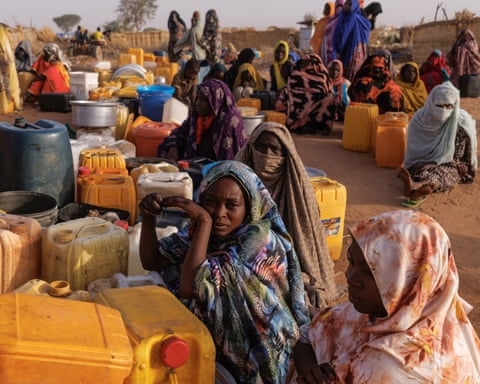
The recent United Nations report on the fall of El Fasher in Sudan presents a grim catalog of horrors. The documented acts—mass killings, systematic sexual violence, and the targeted persecution of specific ethnic groups—bear the unmistakable signature of genocide. Yet, this outcome was not an unforeseen disaster. It was a meticulously predicted catastrophe that the world chose not to avert.
For months, warnings echoed through diplomatic channels, humanitarian agencies, and intelligence reports. Analysts tracked the military buildup of the Rapid Support Forces (RSF) around the city. Internal government assessments in several Western capitals flagged the imminent danger. A United Nations Security Council resolution explicitly demanded an end to the siege. Despite this chorus of alarm, the international response remained fatally inert. The siege tightened, and the city fell, followed by the very atrocities that had been forecast.
This inaction culminated in a stark contradiction last October. High-level diplomatic talks, hosted by a major power and involving the warring parties, concluded just days before the RSF launched its final assault on El Fasher. Far from preventing violence, these negotiations appear to have provided a diplomatic smokescreen for its execution. The subsequent calls for ceasefires rang hollow, offering no analysis of why previous diplomacy had failed so utterly.
This paralysis stems from a calculated prioritization of geopolitical interests over human lives. A central, well-documented factor in the conflict is the sustained external support for the RSF, with multiple investigations pointing to a key regional power as a principal enabler through arms, financing, and logistics. However, Western governments have consistently avoided confronting this reality, instead treating the accused state as a neutral mediator in peace efforts. This approach institutionalizes a fatal contradiction, granting a party to the conflict a seat at the table meant to end it.
The diplomatic strategy has been one of deliberate ambiguity. Public statements express deep concern for civilians while deliberately diffusing blame, attributing weapons flows to a vague multitude of actors. This obfuscation protects strategic alliances but offers no protection to the vulnerable. It reduces urgent diplomacy to political theatre, where the appearance of engagement substitutes for genuine accountability.
The consequences of this failed model are clear. By treating militia leaders implicated in atrocities as legitimate political partners, the international community inadvertently validates violence as a tool for gaining power and recognition. It reinforces a “liberal peacebuilding” framework that privileges deals between armed elites while marginalizing the civilian population that bears the brunt of the war.
If the lessons of El Fasher are to be heeded, a fundamental shift is required. Support must be channeled directly to the Sudanese civilian networks—local committees, emergency responders, and humanitarian groups—who are sustaining life amid the chaos. The external enablers of the conflict must be formally and publicly identified, with tangible consequences, including targeted sanctions on the financial and logistical networks sustaining the war. Finally, any future political process must be built on mechanisms with real teeth: independent monitoring, enforceable civilian protection clauses, and automatic repercussions for violations.
Peace cannot be constructed on the same unstable foundations of elite bargaining that have repeatedly collapsed. The tragedy of El Fasher stands as a testament to the cost of that illusion. Without the courage to confront the sources of violence, diplomacy remains an empty performance, and calls for accountability merely a slogan.