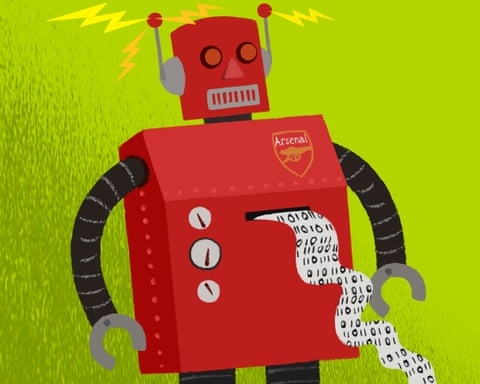
There is a unique strain of pressure in modern football, one that feels less like a sporting contest and more like living inside a vibrating smartphone. It’s a pressure defined not just by history or expectation, but by a relentless, omnipresent digital gaze. Nowhere does this feel more acute than in the current Premier League campaign, where one club’s pursuit of glory has become a perfect symbol of this exhausting new reality.
The narrative is familiar: a talented squad, a meticulous manager, a clear path to the summit. Yet, the experience of watching it unfold is anything but straightforward. It feels like doom-scrolling—a cascade of nervy, controlled performances where victory brings relief more than joy, and every dropped point triggers a seismic online event. The football itself can be a tense, frictionless affair, a game of finely calibrated risk-aversion that seems to prize control above all else.
Explanations abound. Some point to historical weight, the burden of a long wait. Others cry “bottling,” a lazy term that mistakes outcome for character. But the most compelling theory is that we are witnessing something new: the first truly post-human title challenge. This is a project built on a foundation of data, where every movement is tracked, every decision simulated, and fatigue is predicted by algorithm. The manager often speaks in the polished, vector-based language of corporate strategy, a figure who could be an AI rendering of intense football leadership. The team can appear less like a band of brothers and more like a highly advanced system, executing patterns with robotic precision.
The flaw, however, may not be in the machinery itself, but in the environment it operates within. This is the crux. The team is not just playing football; it is performing under a microscope that never closes. Fandom now exists primarily in the digital sphere—a constant, churning torrent of analysis, anticipation, and angst. The narrative for the entire season was written in September; every match is merely a data point feeding an already-established story of triumph or collapse. There is no quiet space, no room to breathe. The team is terminally online.
This constant scrutiny is the most overlooked factor in elite sport today. How does it change you? It must. When every pass is dissected in real-time, every touch judged by millions, spontaneity becomes a risk. The instinct to dance is suppressed by the knowledge that everyone is watching, recording, and waiting to meme your misstep. The need to create is stifled by the fear of the mistake that will echo across a thousand timelines.
The solution, as in life, seems to be the search for a silent centre amidst the noise. Can a system designed for total observation find a way to switch off the cameras in its own mind? Can players taught to follow optimal pathways learn to sometimes wander? The challenge is profound. To succeed now is to find a bubble of stillness within a hurricane of hot takes and live reactions.
If this title bid ultimately falls short, the post-mortem will cite missed chances and tactical rigidity. But a deeper truth may linger: that in the age of the hive mind, the greatest test is not just beating your opponent on the pitch, but learning how to briefly, vitally, disappear.