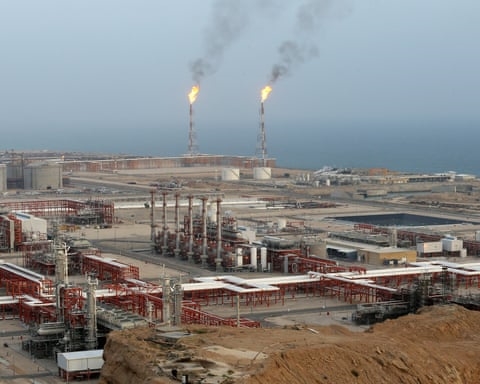
A significant escalation in regional hostilities has placed critical energy facilities across the Persian Gulf on high alert. This follows a military strike on Iran’s South Pars gas field, the world’s largest natural gas reservoir. In response, Iranian military forces have issued a stark warning, declaring key energy infrastructure in Saudi Arabia, the United Arab Emirates, and Qatar as imminent targets for retaliation.
The warning, delivered by Iran’s Revolutionary Guards, specifically named several major refineries, petrochemical complexes, and gas fields. It urged all civilians and personnel to evacuate the identified areas immediately. The move represents a dangerous new phase in the conflict, shifting the focus directly onto the economic lifelines of Gulf nations.
The initial strike on the shared Iranian-Qatari South Pars field has been widely attributed to Israel, reportedly with U.S. support. Until now, the region’s oil and gas production infrastructure had been largely spared from direct attacks, a factor that had helped contain volatility in global energy markets.
The immediate market reaction was severe. Global oil benchmarks surged by approximately 5%, breaching $108 a barrel, while European natural gas prices jumped over 7.5%. Analysts warn that any successful attack on the named facilities could trigger a severe supply shock, given that regional oil exports have already fallen by an estimated 60% from pre-conflict levels due to existing disruptions.
A Qatari government official condemned the threat, stating that targeting such infrastructure “poses a direct risk to global energy security and the stability of the region.” Meanwhile, an Iranian regional governor described the latest developments as a swing toward “full-scale economic war.”
The situation underscores the fragile state of global energy transit, particularly through the Strait of Hormuz. Iran has maintained its own crude shipments through the vital waterway while repeatedly threatening vessels from neighboring states. The explicit threat to energy hubs marks a pivotal and perilous turn, moving the conflict beyond military engagements and into the core of the global economy.