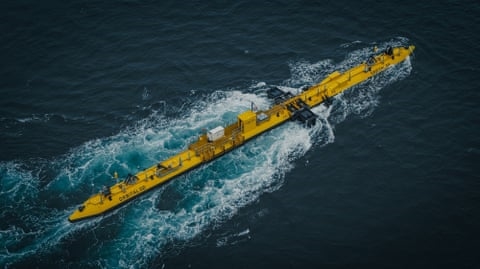
As electricity prices climb across the American Midwest and Northeast, a novel form of hydropower is gaining traction in the waterways of the Great Lakes basin. Unlike traditional dams, this technology uses submerged turbines placed directly in river currents to generate electricity, offering a potential local energy source amid rising grid costs.
The Great Lakes system, containing nearly 20% of the world’s surface freshwater, is drained by several major rivers with strong, consistent flows. These waterways, particularly the St. Lawrence and Niagara Rivers, are now being targeted for so-called “hydrokinetic” energy projects. Proponents argue the technology can provide a constant, renewable baseload of power, especially valuable for industrial users and as a backup during grid instability.
“These rivers offer a tremendous, untapped resource,” explained one industry executive. “The water moves 24 hours a day, regardless of the weather, providing a reliability that solar and wind sometimes cannot.”
The move comes as households and businesses face significant rate hikes. Regulatory approvals in states like New York, Michigan, and Ohio have led to higher bills, with further increases anticipated. This financial pressure is intensifying the search for alternative and resilient power solutions.
The technology itself involves anchoring arrays of carbon-fiber turbines to riverbeds, where the current spins the blades. A pilot project is slated to begin operations in Montreal later this year, with another planned for the Niagara River near Buffalo. The developers highlight a project in a remote Alaskan village, which has operated for several years without reported harm to local salmon migrations, as evidence of its environmental compatibility.
However, the expansion is not without debate. Environmental advocates stress that any deployment must be rigorously assessed to avoid disrupting aquatic ecosystems. “Sustainable energy is critical, but it must be done responsibly,” said a representative from a Great Lakes conservation alliance. “We cannot sacrifice the health of our rivers in the process.”
Another hurdle is the slow-moving nature of some connecting channels within the lakes system. Researchers are working on adaptations, including a technology that can generate power from water moving at very low speeds, potentially widening the areas suitable for development.
A key advantage in the freshwater environment is the absence of corrosive saltwater, which is expected to extend equipment lifespan and reduce long-term costs compared to marine-based systems. Furthermore, specific federal investment incentives for marine energy remain in place, providing a stable financial backdrop for developers even as policies shift for other renewables.
With electricity demand growing and costs rising, the push to harness the constant flow of the Great Lakes’ rivers is poised to become a more prominent feature of the regional energy landscape.