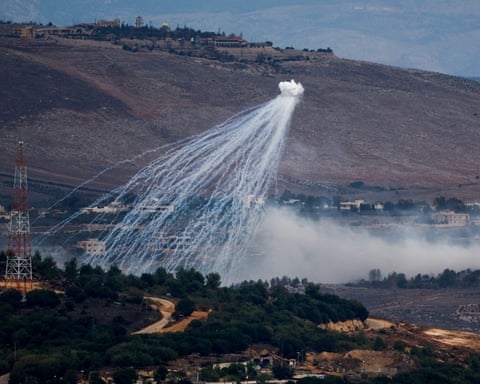
Evidence has emerged suggesting the extensive deployment of incendiary munitions containing white phosphorus in southern Lebanon over a prolonged period. Researchers analyzing visual data claim to have documented hundreds of such strikes, with a significant percentage occurring in populated and agricultural zones.
The munitions in question are designed to create smoke screens or illuminate areas. However, their use in regions with civilian infrastructure is highly contentious due to the severe secondary effects. The chemical ignites upon contact with air, burning at extreme temperatures and producing dense, toxic smoke. Beyond the immediate danger, these strikes are reported to have ignited widespread fires, destroying thousands of hectares of forest and farmland.
A concerning long-term impact, highlighted in a recent study, is environmental contamination. The report indicates that repeated strikes can saturate soil with phosphoric acid and toxic heavy metals, potentially degrading soil health and reducing future agricultural productivity for years to come. Furthermore, unexploded residue poses an ongoing hazard, capable of igniting spontaneously if disturbed.
The findings have fueled allegations that the use of such weapons may constitute a form of environmental warfare and a tactic to depopulate border areas. One researcher involved in the analysis suggested the pattern of strikes could be intended to clear vegetation for visibility and to create a buffer zone, effectively “scorching the earth.”
When questioned about specific allegations of deploying these munitions over residential areas, a military spokesperson stated that visual identification alone could be misleading due to similarities between different types of smoke shells. Broader statements from officials have emphasized efforts to minimize civilian casualties, including calls for populations to evacuate specific conflict zones.
The situation in southern Lebanon remains severe, with intense hostilities continuing to displace a large portion of the local population and causing significant damage to infrastructure and the environment.