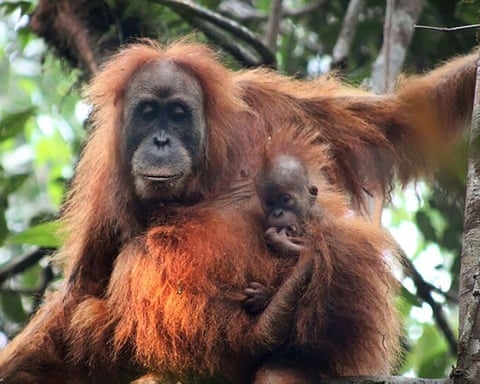
A catastrophic flood event in Indonesia last month, which claimed nearly a thousand human lives, has also delivered what scientists are calling an “extinction-level” blow to the world’s rarest great ape.
The Tapanuli orangutan, a species only formally identified in 2017, is now facing a dire threat to its survival. With an estimated wild population of fewer than 800 individuals confined to a fragment of forest in Sumatra, the species was already critically endangered. New analysis suggests the recent disaster may have wiped out a significant portion of that number.
Conservationists report that the deluge and resulting landslides in the Batang Toru region caused catastrophic damage to the ape’s primary habitat. Satellite imagery reveals massive scars on the landscape, with some erosion gullies stretching over a kilometer. Experts believe the torrents of mud, water, and debris would have swept away everything in their path.
Focusing on the most densely populated section of the orangutan’s range, known as the West Block, a team of scientists estimates that between 6% and 11% of the local population may have perished. For a species with such a tiny and fragmented population, this level of adult mortality is devastating.
“The loss of even a single individual is a severe setback,” said one conservation leader in the region. “The area has fallen into an eerie silence following the landslides.”
The disaster has compounded existing pressures. The Tapanuli orangutans’ current highland habitat is not their preferred environment but one they have been forced into by development and deforestation in lowland areas. The flooding destroyed crucial sources of food and shelter, making the remaining apes even more vulnerable.
Environmental assessments have pointed to a combination of factors behind the scale of the flooding, including deforestation and industrial activity in the sensitive ecosystem. In response to the disaster, authorities have suspended permits for regional projects, including a hydroelectric dam and a gold mine, pending a full review.
Scientists and conservation groups are now issuing an urgent call to action. They are demanding an immediate halt to any development that further damages the remaining habitat, a comprehensive survey to assess the precise toll on the orangutan population, and efforts to expand protected areas and restore lost forest. The future of the Tapanuli orangutan, they warn, now hangs in the balance.