Marine archaeologists are engaged in a critical salvage operation off the coast of Copenhagen, working to excavate the wreck of a historic Danish warship before a major construction project buries it forever. The vessel, identified as the Dannebroge, was the flagship of the Danish fleet and met its end in a fierce naval engagement over two centuries ago.
The discovery was made in approximately 15 meters of water within the harbour, where divers are contending with near-total darkness and thick sediment. The find coincides with the 225th anniversary of the 1801 Battle of Copenhagen, a pivotal conflict in the Napoleonic Wars. In that battle, a British fleet under a famed admiral attacked the Danish navy, which was blockading the harbour to protect the city. The Dannebroge was a primary target and sustained catastrophic damage before catching fire and exploding.
“This wreck is a significant piece of our national heritage,” stated the lead maritime archaeologist on the project. “Historical accounts provide one perspective, but the physical evidence from the ship itself can tell us the visceral, human story of what it was like for the crew during that bombardment.”
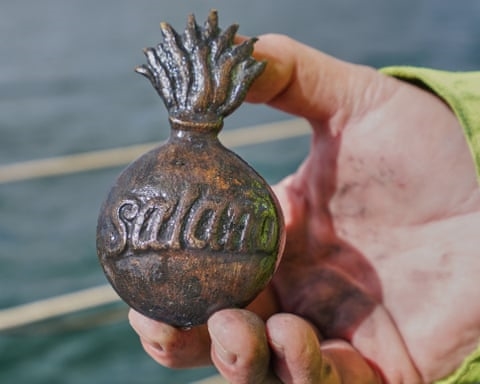
The archaeological team has already recovered numerous artefacts from the seabed, including cannons, personal items like shoes and bottles, uniform insignia, and human remains. The size of the timber and scientific dating of the wood confirm the wreck’s identity and age.
Time is of the essence for the researchers. The entire site is slated to become part of a massive new coastal development, a housing district projected for completion around 2070. Construction work is imminent, threatening to seal the historic wreck beneath new foundations.
“The conditions are extremely challenging,” explained one of the diving archaeologists. “Visibility is often zero. You have to navigate and search by touch, feeling your way across the seabed, which is itself littered with centuries-old cannonballs.”
The battle is famously part of Danish history and lore, commemorated in art and literature. The ongoing recovery effort aims to preserve tangible remnants of that day before they are lost to modern development.