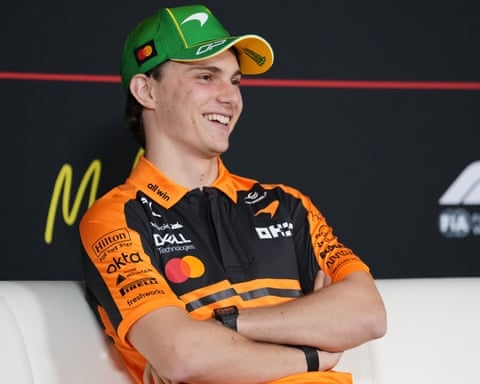
As Formula One returns to Albert Park for the season-opening Australian Grand Prix, the spotlight shines brightly on local hero Oscar Piastri. The McLaren driver finds himself at a pivotal juncture, navigating the delicate balance between personal championship aspirations and unwavering team loyalty in a sport undergoing its most significant technical transformation in decades.
The 2026 season introduces a sweeping new set of regulations, centered on advanced electric-boosted power units and redesigned, more agile chassis. This reset has shuffled the competitive order, with Piastri acknowledging that McLaren’s recent dominance may be challenged initially. He anticipates a fierce early battle between Mercedes and Ferrari, with Red Bull also in contention, while his own team works to optimize its new package.
This comes after a 2025 campaign that served as a potent learning experience for the Australian. Having held a substantial mid-season points lead, he ultimately finished third in the standings. The latter part of the year saw internal team strategies occasionally favor his teammate, coinciding with a dip in his own results. In response, McLaren has reviewed its protocols for in-race decisions, aiming for a more streamlined approach this season.
Addressing any speculation of discord, Piastri firmly dismissed the idea of a rift with the team’s leadership. He characterized the challenges of the previous year as typical growing pains for any top-tier operation and insisted the working relationships within McLaren have emerged stronger. His philosophy is clear: championship success is a collective endeavor.
“The quickest route to not winning a title is to work against your own team,” Piastri stated. “We race for the team’s best interest, which includes our individual results. There’s no rebellious streak here—it’s about collective intelligence.” He emphasized that while not every call may be perfect, the intent behind team directives is always geared toward ultimate success.
Piastri’s commitment underscores the precarious nature of an F1 seat, a reality highlighted by the evolving careers of other Australian drivers. Daniel Ricciardo, despite his proven talent, now views a full-time return as unlikely. Meanwhile, Valtteri Bottas makes a welcome comeback with the new Cadillac squad, bringing a renewed appreciation for the sport after a year away.
Bottas’s return is part of a reshaped grid that also sees Audi enter as a full works team. The regulatory changes, described by veteran Lewis Hamilton as the most drastic of his career, extend beyond the garage and into the driver’s cockpit. A key new skill will be the strategic management of electrical energy deployment during races.
Drivers must now carefully harvest energy by lifting off the throttle in certain corners to ensure they have sufficient battery boost for critical overtaking moves or defensive actions later in the lap. Misjudging this balance could cost precious seconds. “It’s a compound effect,” Hamilton explained. “A small lift in one corner can define your entire lap time.”
As the cars take to the track in Melbourne, Piastri and his rivals are not just beginning a new championship; they are learning a new formula. For the home favorite, the path forward is built on synergy with McLaren, a partnership he believes is his strongest asset in the pursuit of the ultimate prize.