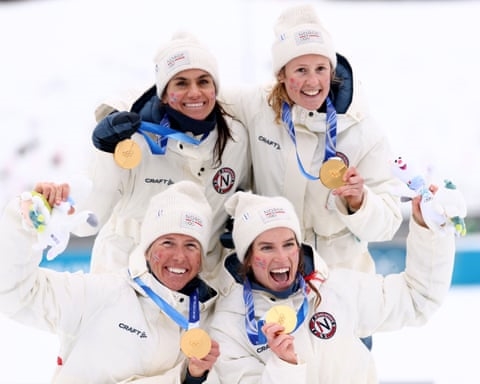
A nation of just over five million people has once again demonstrated its winter sports supremacy, finishing atop the medal standings at the most recent Winter Games. The Scandinavian powerhouse secured a historic number of gold medals, outpacing global giants with populations many times its size.
The country’s athletes collected an unprecedented total of gold medals, setting a new benchmark for a single Winter Olympics. A standout performer was a cross-country skier who alone captured six gold medals, a tally exceeding the entire national haul of most participating countries. This individual feat underscored the nation’s collective strength.
The scale of this achievement becomes even more striking when compared to the results of far larger winter sports nations, including the United States, China, and Germany. Another European country, renowned for its speed skating prowess, also performed exceptionally well relative to its population size, matching the host nation’s gold medal count.
The Games also proved successful for nations not traditionally associated with winter sports. Both Great Britain and Australia celebrated their most fruitful Winter Olympics to date, each securing multiple gold medals. While the United States placed second overall, its gold medal count still represented a national record.
This Olympic triumph is part of a sustained pattern of excellence, with the nation having secured the most gold medals at every Winter Games for over a decade. Its sporting prowess extends beyond the snow and ice, with world-class competitors in football, tennis, golf, and athletics.
Analysts point to a combination of factors behind this enduring success. Favorable climate and geography provide a natural foundation, but cultural and philosophical approaches are considered equally critical. The country enjoys significant wealth per capita, and physical activity is deeply woven into the national fabric.
A distinctive feature of its sports culture is a de-emphasizing of intense competition and early specialization for children. The focus for youth is placed squarely on enjoyment and participation, with the belief that this inclusive approach retains more young athletes in the system, allowing talent to develop over time.
The nation’s medal output is heavily concentrated in specific winter disciplines like cross-country skiing, biathlon, and ski jumping. Investment is directed toward these accessible, traditional sports rather than more equipment-intensive events.
This strategy reflects a broader societal ethos. As one former Olympian from the country noted, success is viewed as a product of collective effort and dedication rather than individual extravagance. A sports science professor summarized the core principles driving the nation’s athletic achievements as collaboration, open communication, and a supportive environment.
The results speak for themselves, offering a compelling case study in how a small nation can consistently outperform the world’s largest countries on sport’s grandest winter stage.