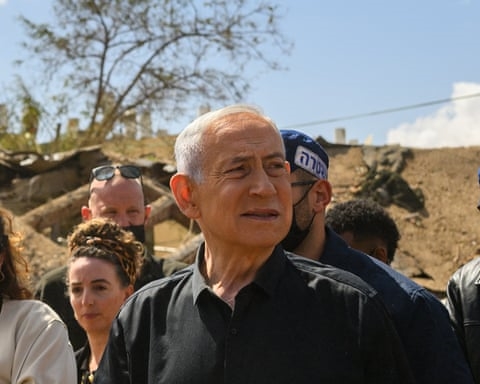
As conflict with Iran enters its fourth week, Israeli Prime Minister Benjamin Netanyahu appears to be leveraging the national security crisis in a bid to salvage his political future. Despite the human cost and regional instability, the war enjoys broad domestic support, creating a backdrop against which the embattled leader is attempting to reshape his legacy.
The Israeli military campaign, launched in response to Iranian missile strikes, has unified the nation’s political spectrum. Opposition parties have suspended election campaigning to present a united front, while public opinion polls indicate overwhelming backing for the government’s actions. This surge in national cohesion has fueled speculation that Netanyahu may call an early election to capitalize on the wartime consensus and his strengthened alliance with the United States.
For Netanyahu, the stakes extend far beyond the battlefield. His political career faces existential threats from multiple directions: a looming state inquiry into the security failures of October 7, 2023, persistently low pre-war polling numbers, and an ongoing corruption trial where he faces charges of bribery, fraud, and breach of trust. Losing power could mean standing trial as a private citizen, a prospect he has reportedly sought to pre-empt through discussions of a potential pardon.
Analysts suggest the prime minister views a decisive confrontation with Iran as a singular opportunity to alter his public image. A minister close to Netanyahu was quoted prior to the conflict stating that the leader believed dismantling what he termed an “Iranian axis of evil” was the only path to rehabilitating his standing after the October 7 catastrophe. While a previous, shorter conflict with Iran did little to boost his popularity, the current prolonged engagement is seen by his circle as a potential reset button.
Public opinion researchers note a shift in perception since the war began. Where once a majority believed Netanyahu’s strategic decisions regarding Gaza were politically motivated, now a significant portion of the Israeli public accepts the government’s stated security rationale for attacking Iran. This change, however, has not yet translated into a sustained surge of trust in his leadership, with any polling bumps quickly receding.
The war has also altered the domestic political conversation, shifting media focus away from the ongoing situation in Gaza and the occupied West Bank. Critics within Israel, primarily from the country’s Palestinian minority and families affected by past violence, question the conflict’s objectives and duration, but their voices remain a minority in the current climate.
Internationally, the campaign carries significant risks. While the U.S.-Israeli alliance has been reaffirmed, there are concerns in Washington about being drawn into an open-ended conflict. Some American officials have resigned in protest, explicitly blaming Israeli pressure for the war. Analysts warn that if the conflict results in significant American casualties, economic disruption, or a protracted stalemate, it could severely damage bipartisan support for Israel in the United States—a relationship Netanyahu has long touted as a personal diplomatic achievement.
The ultimate political calculation for Netanyahu may hinge on timing. If the conflict concludes before Israelis head to the polls, he could showcase a security victory and his close ties with the U.S. administration. However, if the war drags on, sours the vital American alliance, or fails to deliver a clear result, any short-term political gains could vanish. As one commentator warned, a military victory that costs Israel its primary strategic partnership would be a pyrrhic one, jeopardizing the nation’s long-term security in a volatile region.
The coming election will thus serve as a referendum not only on Netanyahu’s leadership but on the very strategy of using high-stakes military confrontation as a tool for political survival.