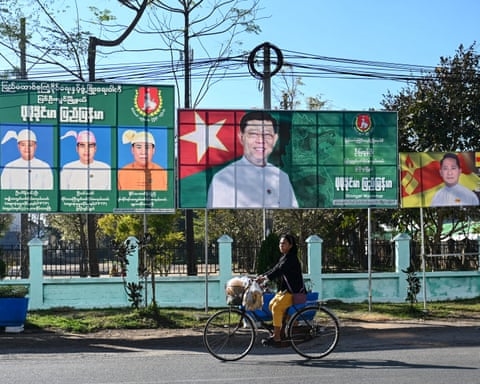
Myanmar is set to hold a national election this Sunday, the first since the military seized power in a 2021 coup. The vote, however, is widely viewed by international observers and analysts as a calculated maneuver by the ruling generals to create a veneer of legitimacy for their continued authoritarian rule, rather than a genuine step toward democracy.
The electoral landscape bears little resemblance to the country’s last democratic vote in 2020. The National League for Democracy (NLD), which won that election by a landslide, has been forcibly dissolved. Dozens of ethnic political parties have met the same fate. In total, monitoring groups report that parties which garnered over 70% of the vote and 90% of parliamentary seats in 2020 no longer exist.
While 57 parties will appear on the ballot, analysts note the vast majority are seen as proxies for or dependent on the military. Only a handful are competing nationwide, with the military-backed Union Solidarity and Development Party effectively running unopposed in numerous constituencies. A new, draconian “election protection” law criminalizes criticism of the vote, with penalties ranging from three years imprisonment to death. Hundreds have already been arrested, including individuals merely for “liking” social media posts deemed critical.
The election’s geographic scope further undermines its credibility. Authorities have canceled voting in approximately one-third of the country’s territory, including 56 entire townships and thousands of smaller wards and villages. These areas are either embroiled in intense fighting or under the control of various ethnic armed organizations and local defense forces that oppose the junta.
The military’s push for the vote comes amid a brutal and escalating civil conflict. Data from conflict monitors indicates a significant increase in military airstrikes and drone attacks over the past year, with near-daily strikes hitting civilian infrastructure like schools and hospitals. In a desperate bid to bolster its forces, the regime has intensified forced conscription, with abductions from streets and homes rising sharply, driving many young people to flee.
Despite losing vast swathes of territory following the coup, the military has recently regained some battlefield momentum. This is attributed in part to critical support from China, which moved to cut supply lines to powerful northern rebel groups. The junta has also reformed its command structure to accelerate airstrikes and enforced mandatory conscription.
International reactions to the election are sharply divided. Western nations and the United Nations have dismissed it as a sham. In contrast, China, the junta’s principal ally, has endorsed the process, viewing it as a potential pathway to stability. The junta itself has stated the election is “for the people of Myanmar, not for the international community,” whose satisfaction it deems “irrelevant.”
Security analysts warn that the military’s campaign of violence is unlikely to subside after the polls close. Instead, the anticipated result—a legislature dominated by military-aligned figures—is expected to provide a fig leaf for the generals to continue their campaign to reclaim lost territory by force, with any potential ceasefires seen as temporary tactical pauses rather than moves toward peace.
For many citizens, the vote represents not an exercise in democracy but an act of coercion. As one young activist now in exile stated, “Everyone knows how ruthless this military is. Anyone seen as disapproving of this sham election is at a very high risk.” The Sunday election appears designed not to reflect the will of the people, but to solidify the power of the generals who overthrew it.