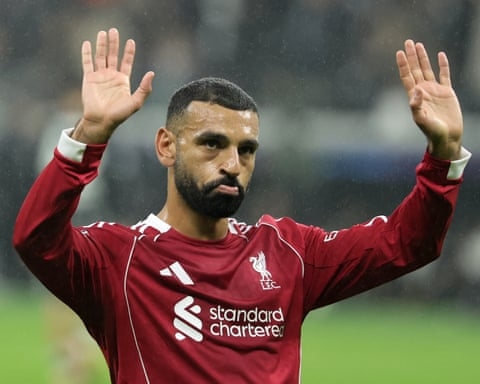
The situation surrounding Mohamed Salah at Liverpool has become the dominant story at Anfield, casting a shadow over the club’s season. The Egyptian forward, undoubtedly one of the greatest players in the club’s modern history, finds himself in an unprecedented standoff with manager Arne Slot, a conflict laid bare by the player’s recent public comments.
Salah’s frustration at being relegated to the bench for several key matches is understandable for a competitor of his caliber. However, his decision to voice those grievances through the media has been widely viewed as a significant misstep. It transformed an internal team matter into a public spectacle, one that has divided the fanbase at a time when unity is most needed.
From a tactical perspective, Slot’s decision had a clear logic. Prior to the change, Liverpool’s defensive record had become a serious concern. Introducing the relentless pressing of Dominik Szoboszlai in Salah’s place was a move designed to restore structural stability, even if it came at the cost of some attacking flair. The subsequent matches, while less free-flowing, saw the team become far more difficult to break down, suggesting the manager’s priority was fixing a leaky defense.
This incident, however, points to a deeper issue of communication and man-management. The handling of a club icon requires a deft touch, and the apparent breakdown has left Salah feeling isolated and scapegoated. It risks tarnishing the legacy of a player whose selfish drive for goals has been the engine of Liverpool’s success for years. To now solely criticize that same self-belief feels contradictory.
While his current form may not match his historic peaks, the notion that Salah’s abilities have evaporated is premature. He retains the quality to be a decisive figure. Yet, the public nature of this dispute has created a rift that may be difficult to repair. It has forced a narrative that the club is moving on from its superstar, a painful and abrupt potential conclusion for a player who delivered a league title.
The core of the issue is a clash between individual stature and collective need. No player, regardless of their past contributions, is exempt from team dynamics. Liverpool’s immediate challenges on the pitch require every member of the squad to be aligned. Salah’s actions, whether born of frustration or a longer-term strategy, have momentarily disrupted that focus.
As the team prepares for its next fixture, the hope is that direct talks between manager and player can find a resolution. Whether that leads to a reintegration or an acknowledgment of a parting of ways, the priority must be to resolve the situation with the dignity befitting Salah’s monumental service to the club. The alternative—a protracted, bitter end for an Anfield legend—is an outcome no one wishes to see.