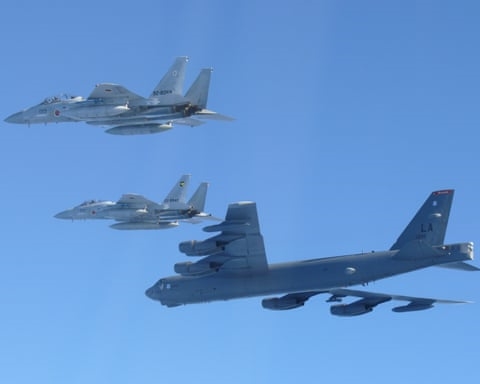
The Japanese government has greenlit its largest-ever annual defense budget, a move that underscores deepening strategic concerns in the region. The proposed spending plan, set for the coming fiscal year, marks a significant increase and advances a multi-year initiative to substantially bolster the nation’s military capabilities.
Central to the new budget are investments designed to enhance counterstrike potential and maritime defense. Officials outlined plans to allocate substantial funds for advanced missile systems and a new network of unmanned drones for surveillance and coastal patrols. This unmanned system, slated for deployment in the coming years, is intended to strengthen monitoring of surrounding waters.
This budgetary decision occurs against a backdrop of heightened diplomatic friction. Recent months have seen sharp exchanges between Tokyo and Beijing, particularly following remarks by Japan’s leader regarding potential regional contingencies. These comments were met with strong opposition, leading to a series of diplomatic and economic responses.
Chinese officials have repeatedly criticized Japan’s military modernization. In recent statements, a defense spokesperson accused Japan of pursuing policies that risk militarizing new frontiers, specifically pointing to developments in space technology. The spokesperson drew historical parallels, suggesting these actions have raised international concerns.
Japan’s security posture has evolved in recent years. While its post-war constitution places restrictions on the use of force, legislative changes have allowed for a broader interpretation of self-defense. The nation’s current security strategy explicitly outlines challenges in the region and calls for a more proactive defense partnership with its key ally, the United States.
The regional security landscape remains complex. Beijing continues a long-term modernization of its military forces, which includes increased naval and air activity near Japan. Incidents involving military aircraft in international airspace have been reported, with Tokyo lodging formal protests over what it describes as dangerous maneuvers.
Separately, the issue of Taiwan remains a persistent flashpoint. The United States, while not granting Taiwan formal diplomatic recognition, continues to provide it with defensive support under American law. Recent U.S. legislative actions have authorized further funding for security cooperation, a move criticized by Beijing as destabilizing.
Chinese authorities maintain that their own military spending is appropriate and defensive in nature, asserting that all operations are conducted in accordance with international norms. The approval of Japan’s record defense budget signals a continued shift in the regional balance of power, with implications for stability in East Asia.