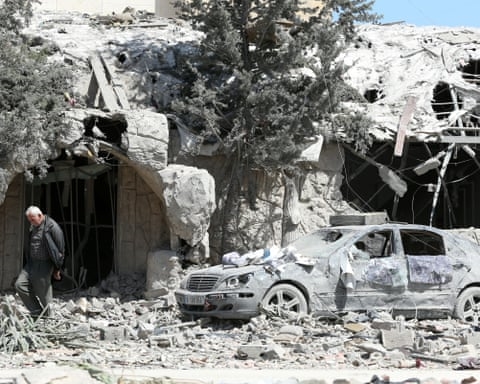
Israeli military operations against Hezbollah positions in Lebanon have intensified, with the country’s leadership stating there is no cessation of hostilities in that theater. This escalation comes amidst international efforts to solidify a fragile truce related to broader regional conflicts.
The Israeli Prime Minister asserted that operations against Hezbollah would continue “with full force,” a stance announced as new airstrikes were reported. This position directly contrasts with statements from other nations involved in delicate negotiations. A U.S. official indicated that talks between Israeli and Lebanese representatives are scheduled for the coming week, though neither party has publicly confirmed this development.
The violence in Lebanon, which reports indicate resulted in significant casualties over a 24-hour period, has drawn sharp criticism from global humanitarian organizations and threatens to undermine recently announced diplomatic initiatives. The Lebanese government has stated that a ceasefire must precede any negotiations.
Regional dynamics further complicate the situation. Iran’s leadership has communicated that while it does not seek war, it will defend its national interests and support its allies. In response to the ongoing strikes in Lebanon, Iranian officials warned they might reconsider the reopening of the Strait of Hormuz, a critical global oil transit route that was part of the recent ceasefire understanding. Iran’s president declared further talks “meaningless” while attacks on Lebanon persist.
Confusion surrounds the exact terms of the recent truce. While some mediators insist the agreement included Lebanon, other key figures have described the Lebanese front as a separate issue. This ambiguity has led to accusations of bad faith and reneging on agreements, casting doubt over upcoming diplomatic meetings planned in a third country.
International reaction has been pointed. Several European and allied nations issued a joint call for a comprehensive ceasefire that includes Lebanon, arguing that excluding it risks broader regional destabilization. European officials condemned the scale of the Israeli strikes, questioning their proportionality.
The immediate economic consequences are being felt globally. Despite the announced ceasefire, maritime traffic through the Strait of Hormuz remains a fraction of its pre-conflict level, with hundreds of ships stranded. After a brief drop, global oil prices are again climbing, reflecting market anxiety over the sustainability of the truce.
As security preparations are made for anticipated diplomatic talks, the situation remains precarious. The continuation of hostilities in Lebanon represents a significant challenge to peace efforts, highlighting the deep divisions and conflicting interpretations that threaten to unravel a tentative peace for the wider region.