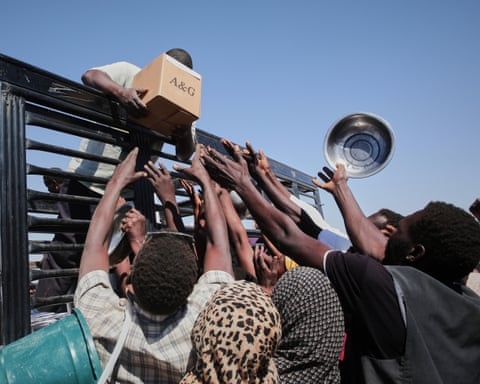
A comprehensive new analysis of global conflicts reveals a catastrophic failure of the international legal framework designed to protect civilians during wartime. The study, examining 23 major armed conflicts over an 18-month period, concludes that core principles of international humanitarian law are being systematically ignored, leading to rampant atrocities and an annual civilian death toll exceeding 100,000.
The report starkly documents a pattern of severe violations occurring with near-total impunity across multiple war zones. It highlights the devastating human cost, noting that these are not isolated incidents but a widespread collapse of wartime restraint.
In the conflict in Gaza, the research notes a staggering decline in the population, with tens of thousands of civilians, including over 18,500 children, killed. Despite a ceasefire agreement, lethal violence has continued.
The war in Ukraine has also seen a sharp escalation in civilian harm, with recorded deaths in 2025 rising significantly compared to previous years. Attacks have increasingly targeted residential areas and critical infrastructure, plunging millions into hardship.
Perhaps most disturbingly, the study identifies an “epidemic” of sexual and gender-based violence as a feature of nearly every conflict reviewed. In the Democratic Republic of the Congo, such brutality is committed by almost all armed groups, affecting victims from infancy to old age. Similar horrific abuses were documented in Sudan following the capture of major cities, with survivors reporting prolonged, gang-related assaults.
Legal experts behind the analysis warn that the consistent tolerance of these crimes is eroding the foundations of international law established in the aftermath of the Second World War. They argue that without immediate and concerted global action, these legal protections risk vanishing altogether.
“The international community’s inaction is a form of permission,” stated one of the report’s lead authors. “Atrocities are repeated because previous ones were met with indifference.”
To counter this crisis, the report issues a series of urgent recommendations. It calls for a universal ban on arms transfers where there is a clear risk they will be used to violate humanitarian law. It also advocates for new restrictions on the use of inherently indiscriminate weapons, like unguided bombs in populated areas, and on certain autonomous targeting systems.
Furthermore, the analysis stresses that ending impunity must become a global policy priority. This requires robust political and financial support for international justice mechanisms, including the International Criminal Court, and stronger national efforts to prosecute war crimes. The current system is hampered by the non-participation of several major global powers in key international legal bodies.
The findings present a sobering assessment: the gap between the promise of civilian protection and the grim reality of modern conflict has become a chasm, with devastating human consequences.