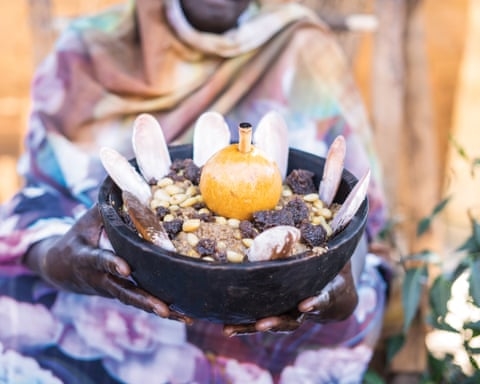
As the holy month of Ramadan begins, its observance is shadowed by profound loss for many. In a time of conflict and displacement, the rituals of food and family take on a new, aching significance. This is the context into which a landmark culinary work, The Sudanese Kitchen, arrives—not merely as a collection of recipes, but as a vital chronicle of a nation under siege.
The book’s author, Omer Al Tijani, began his journey far from home, as a student abroad longing for the tastes of his childhood. Faced with a scarcity of resources, he embarked on a 15-year mission to document Sudan’s diverse culinary heritage. His research became inextricably linked with the country’s recent history, unfolding amid the fuel shortages and fervent protests of the revolution that toppled a long-standing regime.
What he compiled reveals a cuisine as vast and varied as Sudan itself, a rich fusion of African and Arab influences that remained largely unknown even to many Sudanese. Centralized power had kept regional dishes in the shadows. For Al Tijani, the process was full of personal discoveries, just as it will be for readers encountering staples from other Sudanese households for the first time.
Yet, to page through this meticulous work today is to experience a piercing duality. The vivid descriptions of home kitchens, family gatherings, and regional specialties are now overlain with the reality of a devastating war. The book has become an archive of a way of life currently suspended or erased for millions, amid the world’s largest displacement crisis.
The public’s response has been deeply emotional. Where the book might once have sparked celebration, it now evokes a visceral reconnection to a homeland that feels both alive and terribly fragile. Sudanese cuisine, in this context, transcends sustenance. It becomes a symbol, an artifact, and a poignant reminder of what is at stake—a sentiment echoed by refugees who see their culture repackaged far from home.
This resonance is amplified during Ramadan, a period the author describes as a “culinary climax” in Sudan. Traditionally, it is a hyper-social, domestic affair. Streets fill with preparations for special juices and stews; homes open their doors; communities gather. The food itself—elaborate, slow-cooked, and deeply savory—is not for casual dining but for returning home. The loss of these sacred communal spaces is a central trauma of the current conflict.
There is, however, a powerful act of preservation at work. For Al Tijani, this project is a form of resistance. In documenting the tangible details of daily life—the houses, ingredients, and utensils—he fixes a national story against the tide of destruction and erasure. It is a defiant affirmation: This is how we lived. This is who we are.
In the end, the book serves a profound purpose. It allows a people, scattered and grieving, to hold a piece of their homeland steady. It ensures that the story of Sudan is told not only through narratives of war but through the enduring language of its kitchens, keeping a nation’s spirit palpably alive, one recipe at a time.