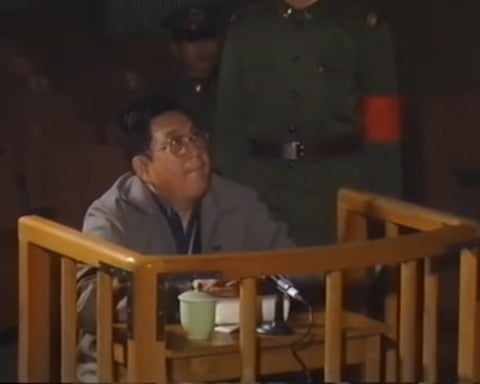
Previously unseen archival material has surfaced online, depicting a military tribunal from the late 20th century. The footage centers on a senior officer of the People’s Liberation Army who, during a period of significant social unrest in 1989, declined to mobilize his unit in accordance with directives issued at the time.
In the recording, the officer articulates his rationale for non-compliance, expressing a desire to avoid actions that might be judged harshly by future historical accounts. He is heard emphasizing a preference for resolving the situation through political dialogue rather than military deployment, questioning the procedural authority behind the orders he received.
The video’s emergence provides a rare, first-person perspective from within the military hierarchy during that era. Analysts note that the content offers insight into the complex decision-making environments faced by senior officials, highlighting internal debates over protocol, loyalty, and the appropriate use of force.
The origins of the footage remain unclear. It was disseminated through online platforms last month and has since attracted considerable attention from historical researchers and observers of modern Chinese political history. One academic familiar with the period described the material as a significant find for understanding the dynamics of the time.
The events referenced in the tribunal remain a subject of stringent control within the country’s official historical narrative, with public discussion heavily restricted. In subsequent decades, the principle of the military’s absolute loyalty to the ruling party has been consistently reinforced as a cornerstone of national policy.
The officer in question was later removed from his post and the party, receiving a prison sentence. He lived outside the capital for the remainder of his life until his death several years ago.
The circulation of this material has reignited academic and external discourse regarding command structures, dissent, and historical accountability during pivotal moments in the nation’s recent past.