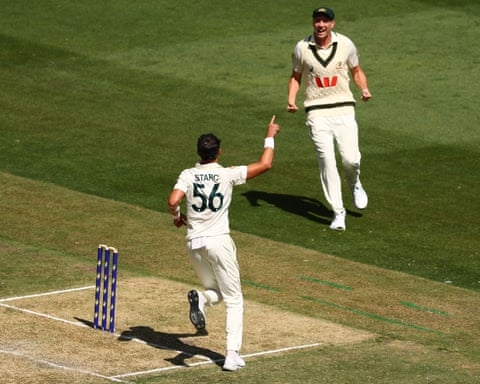
A record crowd at the Melbourne Cricket Ground witnessed an extraordinary and, for many, concerning spectacle on the opening day of the Boxing Day Test, where bowlers dominated to a historic degree. Both Australia and England were dismissed within a single day’s play, a feat not seen in an Ashes contest for over a century, prompting fierce debate about the condition of the pitch.
The official attendance of 94,199 set a new benchmark for the iconic venue, surpassing records set during major global events. However, the sporting drama unfolded on a surface that offered significant and at times extreme lateral movement, leading to a relentless fall of wickets. England, having bowled Australia out for 152, then collapsed themselves for a mere 110 in under 30 overs—their lowest total in recent memory.
The nature of the contest drew immediate and pointed reactions from distinguished former players. A former England captain labeled the pitch a “shocker,” arguing the conditions unfairly favored bowlers. He described watching deliveries deviate sharply both ways, leaving batsmen with virtually no answer, and concluded the contest had become unbalanced.
Echoing this sentiment, a celebrated former fast bowler stated that the surface offered “far too much” movement, suggesting that high-quality Test bowlers do not require such excessive assistance to be effective. Even a legendary Australian captain, whose former team ended the day in a strong position, raised questions, noting the pitch had been prepared with noticeably more grass than in previous years and querying the groundsman’s rationale.
This follows another truncated Test earlier in the series, and another abbreviated match poses a significant financial risk to the host board, threatening substantial losses in ticket sales and associated venue revenue. The dramatic events in Melbourne have thus ignited a dual conversation: one about the essence of a balanced sporting contest and another about the practical implications for the game’s commercial health.