As Valentine’s Day approaches, the usual parade of classic romantic comedies and epic love stories returns to screens. But for those seeking something beyond the well-trodden path, a treasure trove of lesser-known cinematic romances offers profound, funny, and deeply human explorations of the heart.
Consider the unlikely bond in The Annihilation of Fish. Here, two souls living in their own vivid realities—a woman convinced she is the muse of a famed composer and a man grappling with a private demon—find a sanctuary in each other. Their connection, built on quiet dinners and shared solitude in a boarding house, blossoms into a tender, late-life romance that proves love can arrive in the most unexpected of packages.
The pressures of wartime Washington D.C. set the stage for The More the Merrier, a masterclass in simmering attraction. Forced into a shared apartment, a pragmatic woman engaged to a dull bureaucrat finds her resolve tested by her charming, rogue of a new roommate. The film’s magic lies not in grand gestures, but in stolen glances and the electric charge of a simple, intimate moment on a doorstep, capturing the precise instant when practicality loses to desire.
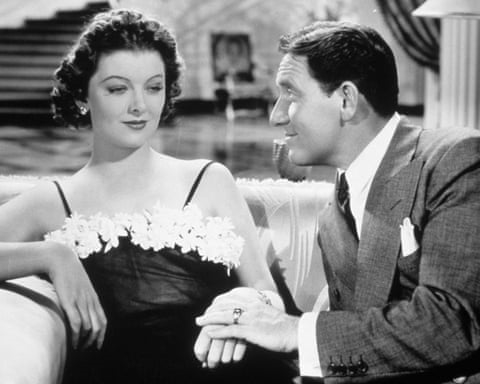
Screwball antics drive the plot of Libeled Lady, a whirlwind of mistaken identities and newspaper scheming. While the farce is expertly executed, the film’s core is a surprisingly nimble exploration of modern relationships. As two couples navigate a web of deception, they are forced to reassess what they truly value, leading to romantic pairings that feel both earned and exhilaratingly right.
For a more psychologically charged encounter, Sanctuary transforms a single night into a gripping duel of wit and will. A dominatrix and her wealthy client engage in a high-stakes battle of blackmail and manipulation that steadily strips away their defenses. What emerges is less a simple power struggle and more a raw, brutally honest, and strangely romantic excavation of two damaged people, proving that the line between conflict and connection can be razor-thin.
The ache of urban isolation is poignantly captured in Lonesome, a silent-era gem. In a rapidly expanding New York City, two clock-punching strangers find a fleeting connection during a holiday escape to Coney Island. The film is a bittersweet symphony of a metropolis, where crowds amplify loneliness but also, just maybe, hold the key to a chance at companionship.
Indie spirit fuels Hav Plenty, a talky, R-rated snapshot of 1990s Black romance and complication. A struggling writer pines for the engaged object of his affection while navigating the flirtations of her friends. Meandering and indulgent in the best way, it captures the specific messiness of young adulthood, where love is often entangled with ego, friendship, and uncertain futures, ending on a note of authentic, unresolved longing.
Cross-cultural charm defines An Autumn’s Tale, which transplants a classic romantic premise to 1980s New York. A sheltered woman from Hong Kong, struggling with culture shock and heartbreak, is reluctantly guided by her street-smart, rough-edged cousin. Their journey from friction to affection is told with a warmth and emotional intelligence that transcends the familiar plot, offering a heartfelt look at finding home in another person.
On a profoundly different scale, Tkaronto is a quiet, contemplative film about identity and connection. Two Indigenous individuals, each feeling disconnected from their heritage and culture, cross paths in the city. Their brief, bittersweet encounter becomes a space for mutual recognition and understanding, exploring romance not just as personal attraction, but as a healing mirror for one’s own soul.
The magic of perspective is at the heart of My Old Ass, a surprisingly moving film that frames romance through the lens of time. An 18-year-old girl, on the cusp of leaving home, gets life advice from her 39-year-old self during a psychedelic trip. The story cleverly uses this device to explore the swell of love in all its forms—for family, for youth, for possibility—and the poignant truth that falling in love is often a leap of faith you’d take again, despite knowing the risks.
Finally, for those who prefer their romance with a darkly comic edge, Addicted to Love presents a deliciously twisted premise. Two jilted ex-lovers team up to meticulously torment their former partners who are now a couple. What begins as a campaign of spite gradually reveals itself as a perverse bonding ritual, a sharp and witty admission that shared madness and petty vengeance can be a strangely solid foundation for a new connection.
These films, from silent era reflections to contemporary psychological dramas, prove that the most compelling love stories often exist outside the spotlight. They remind us that romance is not a monolith but a spectrum—encompassing quiet understanding, psychological warfare, cultural bridges, and the bittersweet ache of time—waiting to be discovered by viewers looking to see the heart in a new light.