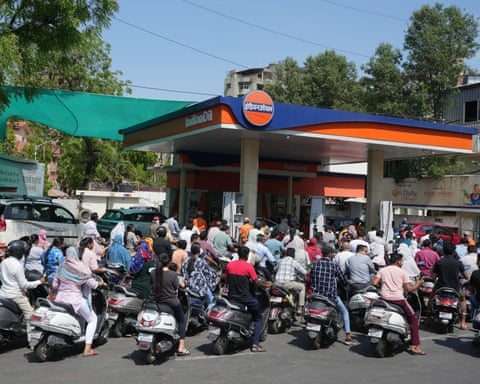
A severe disruption to global oil supplies, stemming from ongoing conflict in the Middle East, is forcing households and businesses worldwide to adopt extreme measures to cope with soaring prices and acute shortages.
The strategic Strait of Hormuz, a critical maritime chokepoint for approximately one-fifth of the world’s oil, has seen its traffic severely curtailed. This has sent international crude prices surging and triggered a cascade of economic pressures. The resulting scarcity of fuels like gasoline, diesel, and liquefied petroleum gas (LPG) is not just an economic statistic but a daily reality altering how people work, heat their homes, and travel.
In India, where a significant portion of LPG imports are routed through the affected strait, the crisis is shuttering businesses. Small enterprises, like roadside food stalls dependent on gas cylinders, face an existential threat as supplies dwindle and wait times extend to over a month. The hospitality sector is reportedly suffering widespread closures, leading to job losses.
The pinch is equally felt in colder climates. In regions like Northern Ireland and Scotland, where many homes rely on heating oil, prices have more than doubled in a matter of weeks, placing warmth out of reach for some. Households are resorting to heating only single rooms, burning foraged firewood, and using hot water bottles to manage the cold, with significant hardship for those with health vulnerabilities.
Transportation habits are undergoing a fundamental shift. Drivers from the United Kingdom to Australia describe meticulously planning every journey, consolidating errands, and eliminating non-essential travel. Some have imposed personal bans on car use except for critical needs like medical appointments, turning instead to bicycles, public transit, or carpooling. The sentiment of carefully considering “every mile we drive” has become a common refrain.
While some individuals express relief at having alternative energy sources like electric vehicles or solar panels, many feel trapped by a lack of viable public transport options, forcing them to absorb the punishing fuel costs. The situation has also led to cancelled vacations and altered driving behaviors, such as reducing speeds to conserve fuel.
International energy advisors have outlined a suite of recommendations for governments and citizens, including increased telecommuting, reduced speed limits, and a major shift from private to public transportation. Analysts warn that without a rapid de-escalation of the conflict, the strain on global energy markets and the subsequent economic and social impacts will intensify.
Beyond the economic anxiety, the crisis has fueled a profound sense of frustration and helplessness among those affected, who see their daily stability upended by a distant conflict. The story emerging globally is one of adaptation under duress, as millions recalibrate their lives in response to an unprecedented energy shock.