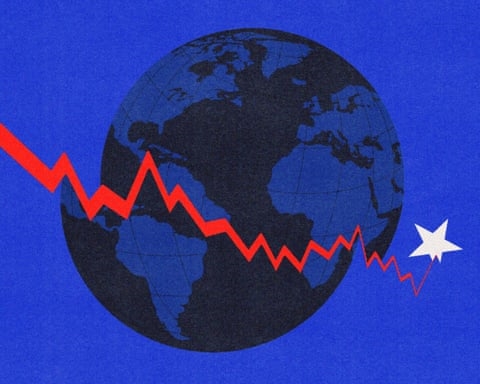
A widening conflict in the Middle East is triggering a starkly uneven economic crisis, exposing a fundamental shift in the global order. While some nations face severe domestic disruption, others, most notably the United States, appear insulated from the worst effects, highlighting a new era of geopolitical and economic fragmentation.
The immediate shockwave has been energy supply. The closure of a critical maritime chokepoint has strangled the flow of oil and gas, with Asian economies bearing the brunt. Nations heavily reliant on imported fuel have been forced into drastic measures. Governments have redirected essential gas supplies to households, rationed fuel, shortened official workweeks, and even shuttered universities to conserve resources.
Europe, while less directly dependent on Middle Eastern energy, faces its own turmoil through skyrocketing global prices for natural gas and oil. Financial markets reflect this anxiety, with European equities suffering significant declines.
In stark contrast, the United States economy has demonstrated notable resilience. Its benchmark stock index has seen a comparatively modest downturn, a stability largely credited to its vast domestic energy production, which buffers it from international price spikes.
This disparity underscores a broader, more troubling narrative. The nation once viewed as the primary steward of international stability is now seen by many allies as a principal source of global volatility. Recent economic data reveals a telling pattern: while growth forecasts for the U.S. remain robust, projections for major economies across Europe, Asia, and Latin America have been downgraded.
The pain extends beyond growth figures. Critical agricultural supplies like urea, vital for farming in major nations, are trapped by the maritime blockade. Food-importing countries in the Gulf face potential shortages. Furthermore, economies like Bangladesh and Pakistan brace for a sharp decline in remittances as the war impacts the livelihoods of their millions of citizens working in the region.
Analysts warn the repercussions are multifaceted and contradictory. Rather than accelerating a transition to renewable energy, the crisis has, in some regions, renewed interest in coal as a desperate stopgap. International trade bodies forecast a significant slowdown in global commerce, with European exports expected to contract.
The situation prompts a sobering reassessment among international partners. The justification for military action and accompanying economic policies appears increasingly unpredictable to foreign capitals, fostering a deep-seated uncertainty. This perception of a capricious superpower, willing to unleash global economic havoc while remaining relatively shielded, is now factored into long-term risk assessments worldwide.
The emerging reality is one of a fractured global system, where economic security is no longer a collective endeavor but a national contest, with vulnerable nations paying the highest price for distant conflicts.