A Seoul court has handed down a life sentence with hard labor to former President Yoon Suk Yeol, convicting him of leading an insurrection. The ruling stems from his unlawful declaration of martial law in late 2024, an act the court determined was a direct assault on the nation’s constitutional order.
The presiding judge stated that the former leader’s intent was to deploy military forces to blockade the National Assembly, aiming to detain key political figures, including the assembly speaker, and prevent legislative proceedings. The court emphasized the severe damage caused to the political neutrality of the military and police, as well as the significant harm inflicted on South Korea’s international credibility and domestic social cohesion.
In delivering the sentence, the court cited the defendant’s lack of remorse, his refusal to attend hearings, and the profound social costs of his actions as aggravating factors. While prosecutors had sought the death penalty, the judges imposed life imprisonment, noting that the plans were not meticulously executed and that the use of physical force was somewhat limited.
The dramatic verdict, broadcast live nationwide, closes a major chapter in the political crisis that unfolded over fourteen months ago. On the night of December 3, 2024, the former president attempted to use military force to paralyze the legislature and seize control of electoral institutions, claiming without evidence that he was rooting out “anti-state” forces. His efforts collapsed within hours as lawmakers breached security cordons to revoke the martial law order, leading to his swift impeachment and removal from office.
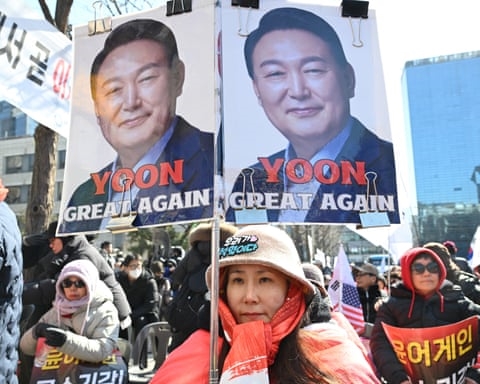
Reactions outside the courthouse were starkly divided. Supporters of the former president, who had gathered waving flags, reacted with anger and despair, some shouting at journalists. Meanwhile, progressive groups celebrated the ruling, though some expressed disappointment that the death penalty was not applied.
The former president faces several additional criminal trials, including charges related to the martial law crisis and an allegation of treason for attempting to provoke a military confrontation with North Korea. He has already been sentenced to five years in a separate case for obstructing his own arrest.
This landmark ruling follows a series of convictions for other officials involved in the crisis. The former prime minister recently received a 23-year sentence, with the court describing the event as a “self-coup” by elected authority. The former interior minister was also jailed for his role.
The legal team for the convicted former leader immediately denounced the verdict as a “predetermined” political show trial and vowed to appeal, claiming the judiciary had bowed to public pressure.
Under South Korean law, a life sentence offers no fixed release date, though parole may be considered after 20 years based on conduct and remorse. Historically, every former South Korean president who has served prison time has ultimately received a presidential pardon.