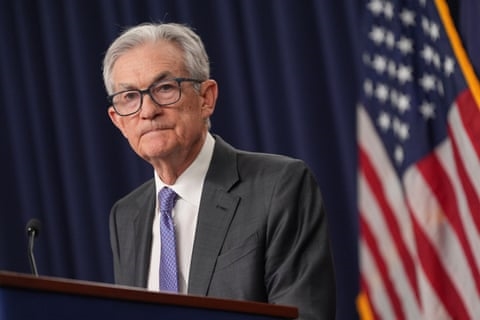
A federal judge has issued an order preventing the Department of Justice from compelling Federal Reserve Chairman Jerome Powell to comply with investigative subpoenas. The judge determined the inquiry, ostensibly focused on oversight of the central bank’s headquarters renovation, lacked legitimate foundation and was instead a veiled attempt to influence monetary policy.
In a ruling issued Friday, Chief Judge James Boasberg of the U.S. District Court for the District of Columbia found the government presented no substantive evidence of criminal conduct. The court concluded the investigation served as a pretext to exert pressure on the Fed chair, either to reduce interest rates or to step down from his position.
Chairman Powell had previously characterized the Justice Department’s actions, initiated in January, as an infringement on the Federal Reserve’s operational independence and part of a broader campaign to sway its rate-setting decisions.
The judicial decision arrives amid persistent public criticism of Powell by former President Donald Trump, who appointed him in 2018. Over the past year, Trump has repeatedly disparaged the Fed chair’s performance, blaming him for not cutting rates more aggressively. The dispute intensified last year when Trump accused Powell of “fraud” related to cost overruns in the Washington, D.C., renovation project—allegations Powell has firmly denied.
This ruling also intersects with the pending nomination of a potential successor to Powell, whose term concludes in May. A key Republican senator has stated that any appeal by the administration in this matter would hinder the confirmation process for the nominee, vowing to oppose the appointment until the cloud of the investigation is fully removed.
In a separate but related matter, the Supreme Court is poised to rule by June on a case involving Fed Governor Lisa Cook. She brought suit after the former president sought to remove her from office last summer based on allegations of misconduct regarding mortgage applications. During hearings, justices expressed significant skepticism about expanding presidential authority over the central bank, highlighting concerns about safeguarding its economic role from political interference.
The judge’s order represents a significant check on perceived executive branch overreach into the traditionally non-partisan realm of monetary policy, reinforcing institutional barriers designed to insulate the Federal Reserve from political pressure.