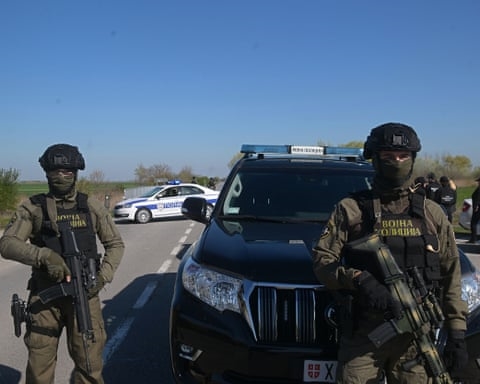
A report of explosives found near a major natural gas pipeline in Serbia has ignited a fierce political debate in Hungary, just days before a critical national election. Serbian authorities stated that military and police units discovered what they described as devices of “devastating power” close to an extension of the TurkStream pipeline, a crucial conduit for Russian gas into Hungary and other parts of Europe.
The timing of the discovery, one week before Hungarian voters head to the polls, has led opposition figures to allege the incident could be a staged provocation. The leading opposition candidate has publicly warned that sources had indicated the possibility of an event involving the pipeline around the Easter holiday, suggesting foreign involvement. He accused the current government of potentially orchestrating a “false flag” operation to sow fear among the electorate.
The Hungarian Prime Minister confirmed he was notified of the find by his Serbian counterpart and convened an emergency meeting of the national defence council. In a public statement, he characterized the incident as a prepared “act of sabotage” and reiterated longstanding claims that another European nation has sought to disrupt energy supplies from Russia, though he stopped short of directly attributing blame for this specific event.
The nation targeted by these insinuations has firmly denied any involvement. Its foreign ministry dismissed the allegations, suggesting the operation was more likely a Russian-backed effort to interfere in the Hungarian electoral process.
This controversy unfolds against a backdrop of a tightly contested race where the ruling party, after 16 years in power, faces a significant challenge. The campaign has been dominated by starkly different visions: the government emphasizing national security risks amid regional conflict, while the opposition focuses on domestic issues like economic performance and institutional corruption.
International analysts have noted that expectations had been building in diplomatic circles for a potential security incident that could be used to justify extraordinary measures or influence the election’s outcome. Some experts viewed the pipeline report as a seemingly convenient development that aligns with a narrative of external threats.
The final days of the campaign are now overshadowed by these security claims and counter-claims, as voters prepare to make a choice that will define the country’s political direction for years to come.