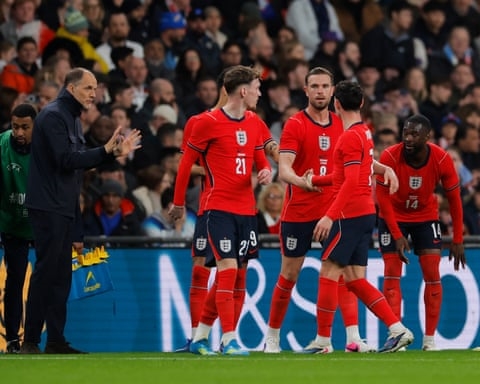
In a match that served as a crucial preparation for the upcoming World Cup, England delivered a disjointed and forgettable performance, drawing 1-1 with Uruguay at Wembley. The encounter, characterized by a palpable lack of cohesion, has sparked immediate debate over the team’s selection and direction.
From the outset, the contest struggled to find any rhythm or intensity. For long periods, the action was stagnant, devoid of the creative spark or urgency expected at this level. The atmosphere in the stadium mirrored the flatness on the pitch, with the vast crowd often rendered silent by the spectacle before them.
The deadlock was finally broken late in the match, though the manner of the goal and the reaction it provoked were telling. England’s opener came from a simple, close-range finish, but the scorer’s name was met with a louder chorus of disapproval from sections of the home support than the goal itself. Uruguay’s equalizer minutes later, awarded from a soft penalty, felt like an inevitable conclusion to a match that had offered little.
The fundamental issue appeared to stem from the composition of the starting lineup. With only a couple of players considered likely starters for the World Cup, the team resembled a collection of individuals auditioning for a role rather than a cohesive unit fighting for a result. The midfield partnership, in particular, seemed unbalanced, failing to provide a platform for control or creativity.
This experimental approach, involving an unusually large squad for the camp, has been a topic of discussion. While framed as an opportunity to assess depth, the result was a team lacking the understanding and collective identity that successful international sides require. Other leading nations have used similar preparatory fixtures to solidify their first-choice teams, making England’s scattergun selection all the more conspicuous.
There were fleeting positives. A substitute introduced at halftime immediately improved the team’s ball progression with incisive forward passing. Another attacking change offered a clear increase in threat, making strong cases for their inclusion in the final tournament squad.
Ultimately, the match served as a stark reality check. It highlighted the immense challenge of building a national team amidst the competing demands of a grueling domestic league schedule, where player fatigue and club interests are constant factors. The performance was a passive, lukewarm affair that seemed to acquiesce to those pressures rather than overcome them.
The primary lesson from Wembley is that the path to World Cup success cannot be navigated with a group of strangers. Building a team spirit and a clear tactical identity is paramount. As the tournament draws nearer, the focus must shift from open trials to forging a unified squad capable of competing at the highest level.