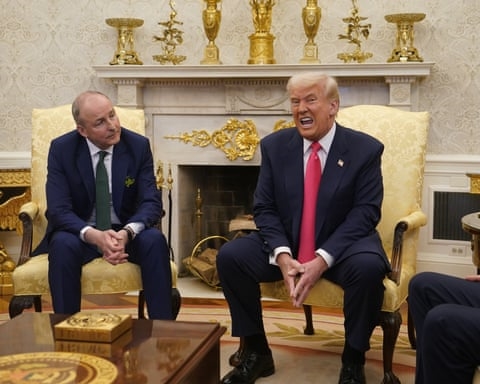
The annual St. Patrick’s Day visit by Ireland’s head of government to the United States, long a cornerstone of diplomatic tradition, is set against a backdrop of heightened political sensitivities this year. The ceremonial exchange of shamrocks at the White House, typically a symbol of enduring friendship, now presents a complex challenge for the visiting leader.
Analysts describe the upcoming engagement as fraught with potential pitfalls. The political climate and policy disagreements between the two nations on several fronts have transformed what is usually a convivial event into a delicate balancing act. Observers note the need for the Irish delegation to navigate these waters with considerable care, as missteps could have significant repercussions.
Points of friction include divergent views on international affairs, corporate taxation policies, and immigration enforcement. Some political figures in the U.S. have voiced strong criticism of Ireland’s positions, adding pressure to the proceedings. Furthermore, there is a vocal contingent within Ireland urging its leader to address American policies directly, while others caution that the primary objective must be to safeguard national interests and avoid provocation.
The tradition itself, which began in the mid-20th century, has historically served as a vital channel for fostering economic and cultural ties. It has provided a unique platform for dialogue and advocacy. However, shifting demographics and political priorities in the U.S. have led some to question the continued automatic goodwill once afforded to such visits.
Preparations for the trip are reportedly focused on emphasizing positive economic contributions, including job creation and investment pledges from Irish companies operating in the U.S. The strategy appears to center on reinforcing mutual benefits and shared heritage, rather than direct confrontation on contentious issues.
Despite the underlying tensions, there is a prevailing sentiment that the symbolic and institutional nature of the St. Patrick’s Day observance will ultimately provide a protective framework for the talks. The occasion’s deeply rooted place in American cultural and political life is expected to encourage a tone of celebration over conflict.
The outcome of this high-stakes diplomatic engagement will be closely watched, as it may signal the future tone of relations between the two longstanding partners.