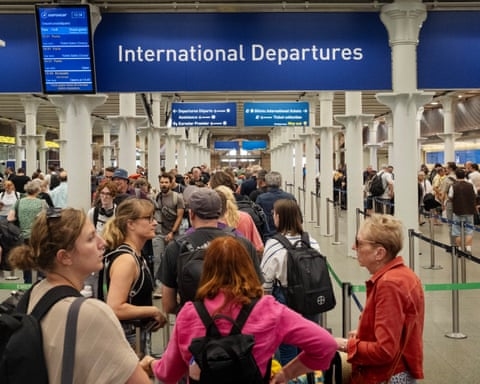
Planned biometric checks for travelers crossing the English Channel will not be implemented in the immediate future, easing concerns of significant disruptions during the busy Easter period. The European Union’s Entry/Exit System (EES), which requires the collection of fingerprints and facial images from non-EU visitors, has faced another delay for rail and ferry routes.
While the EU formally requires the system to be operational from April 10th, technical preparations on the French side are not yet complete. Consequently, passengers using the Eurostar train service, the Eurotunnel vehicle shuttle, or cross-Channel ferries will continue with existing passport procedures for the time being. French border officials will continue to stamp passports manually at controls located in the UK.
The delay means only certain categories of travelers—namely lorry drivers, coach passengers, and foot passengers on ferries—are currently undergoing the new EES registration. Major transport operators had invested heavily in infrastructure, installing numerous kiosks at terminals in anticipation of the system’s launch last autumn, but this equipment remains unused for passenger processing.
Port and rail authorities state they are coordinating closely with French border agencies to ensure a smooth eventual transition. The focus remains on maintaining the flow of traffic and avoiding lengthy queues once the system is activated. Operators advise passengers to follow existing guidance and arrive at stations and ports as indicated on their tickets.
This latest hold-up stands in contrast to the situation at several European airports, where a phased introduction of the EES has already led to extended waiting times and passenger delays. The uneven rollout has prompted criticism from airline industry leaders, who have described operational challenges and called for a further postponement of the full system to prevent travel chaos during peak seasons.
EU regulations currently allow border officials some flexibility to ease procedures if excessive queues form, a provision expected to remain in place over the summer. The continued stalling for Channel routes, however, highlights the ongoing complexities in implementing the new border regime across different modes of transport.