A bipartisan push is underway in Congress to assert legislative authority over military engagements in the Middle East, as a temporary halt in hostilities between the U.S. and Iran shows signs of strain. The effort faces significant political hurdles but underscores deepening congressional concern over the trajectory of the conflict.
The House of Representatives is set to consider a resolution that would curtail the president’s ability to conduct sustained military operations against Iran without explicit congressional approval. The procedural move, requiring unanimous consent, is widely expected to be blocked by opposition lawmakers. Nevertheless, the action highlights a growing insistence from some legislators that the branch of government vested with the power to declare war must have a decisive role.
This legislative maneuver coincides with reports that the recently announced two-week pause in hostilities is fragile. Despite the ceasefire announcement, military strikes have continued in Lebanon, with significant casualties reported. Concurrently, key maritime channels have seen renewed disruptions. The United Nations has issued warnings that ongoing operations risk collapsing the temporary agreement entirely.
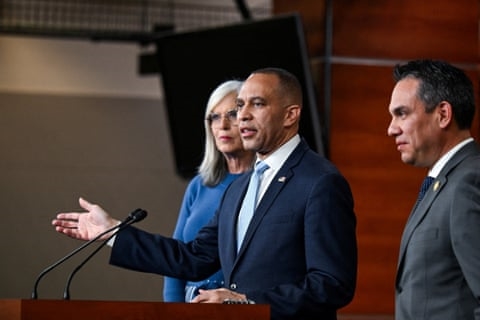
In a communication to fellow lawmakers, House Democratic Leader Hakeem Jeffries criticized the short-term nature of the current pause. “A ceasefire measured in weeks is inadequate to address a crisis of this magnitude,” Jeffries stated, calling for the immediate reconvening of Congress to vote on a measure aimed at establishing a permanent end to the conflict.
The House is currently in a scheduled recess, complicating immediate action. Prospects for the resolution depend on securing support across the aisle, which so far appears limited. While some Republican members have previously supported similar measures targeting other theaters of operation, current sentiments suggest a reluctance to back this specific initiative. One senior Republican lawmaker emphasized a focus on strategic deterrence, stating, “Our objective must be a decisive outcome that ensures long-term security.”
Parallel discussions are occurring in the Senate, where leadership has announced plans to hold a vote on a related war powers measure when the chamber reconvenes next week.
The congressional activity reflects a pivotal debate over the balance of war powers, unfolding against a backdrop of an unstable ceasefire and uncertain diplomatic prospects in the Middle East.