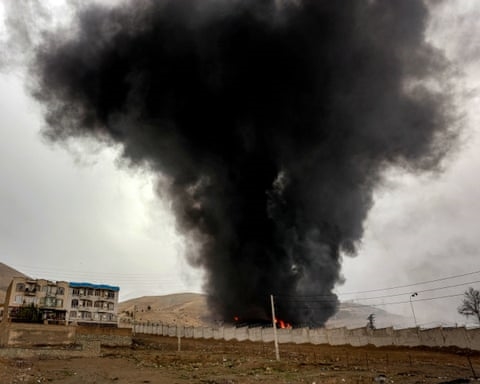
A new assessment reveals the staggering environmental cost of the ongoing hostilities in the Middle East. The initial fortnight of major combat operations has resulted in approximately five million tonnes of greenhouse gas emissions, a volume that exceeds the combined annual output of over eighty lower-emitting countries.
The analysis, conducted by independent researchers, quantifies the climate impact stemming from widespread military activity. The destruction of civilian infrastructure, including an estimated 20,000 buildings, represents the single largest source of emissions, accounting for nearly half of the total.
Military operations themselves are a major contributor. The fuel consumed by long-range bomber sorties, support vessels, and ground vehicles is estimated to have produced over half a million tonnes of CO2 equivalent. Furthermore, targeted strikes on oil storage facilities have led to massive fires, releasing plumes of black smoke and burning millions of barrels of petroleum products.
The conflict has also resulted in the loss of significant military hardware, including dozens of aircraft and naval vessels, the production of which carried its own embedded carbon cost. The extensive use of munitions—thousands of missiles, drones, and interceptors—adds another layer to the emissions total.
Researchers warn that the emissions trajectory is alarming. “The rate at which energy infrastructure is being targeted suggests these climate impacts will accelerate rapidly,” stated the lead analyst. “Releasing emissions equivalent to a small nation’s annual budget in just two weeks is a pace the planet cannot sustain.”
The report underscores a broader concern: that geopolitical instability driven by fossil fuel interests directly exacerbates the climate crisis. Historically, disruptions in energy supply have often led to increased extraction and infrastructure development, locking in further carbon dependence.
“The true cost extends beyond the immediate battlefield,” a co-author of the study noted. “The consequences of this accelerated carbon loading will be borne by vulnerable populations worldwide, compounding the humanitarian disaster.”
The findings highlight a critical, often overlooked dimension of modern warfare: its immediate and profound contribution to global heating, threatening to consume the rapidly diminishing global carbon budget years ahead of projections.