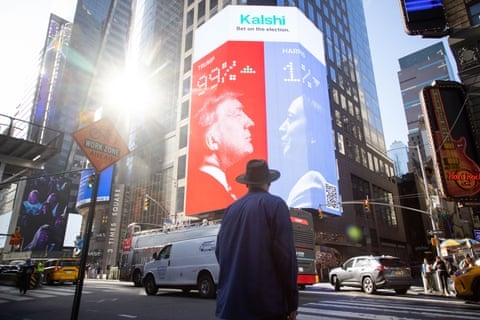
A new legislative effort is underway in the United States Senate to restrict a growing sector of online financial activity. A bipartisan bill introduced this week aims to ban sports-related wagering on federally regulated digital prediction markets, framing such activity as gambling that should fall under state, not federal, oversight.
The legislation, championed by senators from both major political parties, targets platforms that allow users to trade contracts on the outcomes of sporting events, from major championships to regular season games. Proponents argue these “prediction contracts” are functionally equivalent to sports bets, circumventing state laws and regulations designed to govern gambling, protect consumers, and generate public revenue.
“This is not innovation; it’s a loophole,” stated one of the bill’s sponsors. “Allowing these contracts under a federal framework undermines state consumer protections, infringes on the regulatory authority of tribal nations, and creates a system with no public benefit.” The proposed law would also prohibit these platforms from offering simulated casino-style games.
The move amplifies existing scrutiny from state authorities. Several states have recently taken legal action against prominent prediction market companies, alleging they operate unlicensed gambling businesses. In one state, a judge has issued a temporary order blocking a major platform’s operations, specifically barring it from offering contracts tied to sports, elections, and entertainment to users within the state.
“Any entity facilitating unlicensed wagering is breaking the law,” said a state gaming official. “Our duty is to ensure the public can engage in these activities safely through licensed, regulated operators.”
Prediction markets, currently overseen by a federal financial regulator, have expanded rapidly in recent years. They allow users to speculate on a vast array of future events, from award shows to geopolitical developments. While proponents tout them as efficient information markets, critics point to risks of misinformation and the potential for addiction, arguing they lack the safeguards of traditional, state-licensed gambling.
In response to the Senate bill, a leading platform defended its model, suggesting a federal ban would not eliminate demand but would drive the activity to unregulated overseas operators. “This push isn’t about protection; it’s about protecting monopolies,” a company statement read, accusing established gambling interests of driving the legislation.
The debate arrives as the legal landscape for sports wagering continues to evolve, following a Supreme Court decision several years ago that allowed states to legalize it. The new Senate bill seeks to draw a firm line between state-regulated sports betting and the newer, less-restricted prediction markets operating under federal purview.