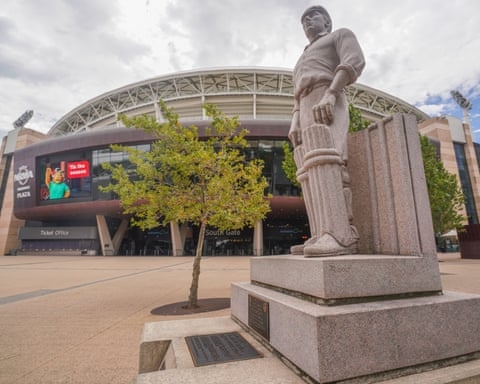
As the eyes of the cricketing world turn to Adelaide for the latest Ashes battle, the ground’s storied past offers more than just a backdrop for sport. Its history is woven with threads of the bizarre, the record-breaking, and the personally vindictive, each tale a testament to the drama that has unfolded on this turf.
Long before the modern stands cast their shadows, the Oval hosted an attraction of a very different kind. In the late 19th century, spectators could have witnessed a towering wooden structure dominating one side of the field: a fully operational rollercoaster. Erected in 1888, this gravity-powered “switchback railway” sent carriages hurtling down steep drops and up opposing slopes, providing a thrill for thousands. It stood for decades, a carnivalesque neighbour to the cricket, until its timber was finally sacrificed to a patriotic bonfire during the First World War. Local lore suggests the echoes of that forgotten joy still linger on quiet nights.
The ground has also been a stage for miraculous escapes. In 1908, with Australia reeling against England, an extraordinary alliance was formed at the crease. Debutant Roger Hartigan, who had secured leave from his day job by telegram, joined the severely ill Clem Hill, who was batting through influenza. From a precarious position, the pair mounted a defiant stand of 243 for the eighth wicket—a national record that endures over a century later. Hartigan’s debut century and Hill’s gritty 160 orchestrated an improbable victory, etching their names permanently into the annals of the sport.
Perhaps the most compelling narratives, however, are those of personal rivalry. The legendary Don Bradman’s relationship with teammate Clarrie Grimmett, a master leg-spinner, soured after Bradman facilitated his removal from the national side. Grimmett, nursing this slight, later found an unusual avenue for redress. While coaching in India, he mentored a young batsman named Vijay Hazare, refining his technique against spin.
Fate brought all three men to Adelaide in the 1947-48 season. Bradman, captaining Australia, watched as Grimmett’s protégé, Hazare, authored a masterpiece of resistance, becoming the first Indian to score a century in each innings of a Test match. As Hazare defied Australia’s fierce pace attack for days, Grimmett watched from the stands, his triumphant celebration a silent but potent message across the field. In that moment, a pupil’s brilliance delivered a master’s long-awaited satisfaction.