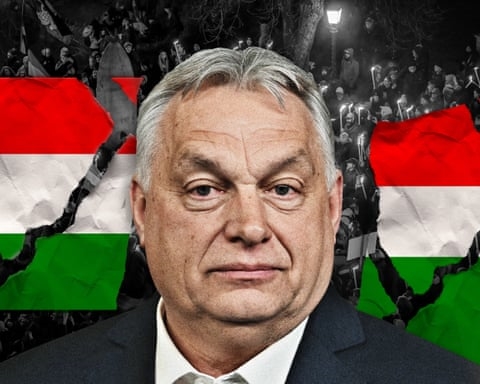
A palpable sense of anticipation is building among Hungary’s younger generation as the nation approaches a critical general election. For many in their twenties and early thirties, the upcoming vote represents a decisive moment for their personal futures and the country’s direction.
This demographic, which has grown up entirely under the long-standing administration of Prime Minister Viktor Orbán, is now emerging as a potent force for political change. Recent surveys indicate a dramatic shift, with a significant majority of voters under 30 expressing their intention to support opposition parties. This trend marks a stark departure from the past and introduces a powerful new variable into the electoral equation.
Interviews with young Hungarians in Budapest reveal a generation grappling with the practical consequences of their nation’s political trajectory. Many cite concerns over economic stagnation, limited professional opportunities, and a perceived decline in public services. The rising cost of living is a daily reality, fueling a desire for a new approach.
“The prospect of staying here under the current conditions is becoming untenable,” shared one 20-year-old university student, who aspires to a teaching career in Hungary. “My entire adult life has been shaped by this political era. The chance for a different path feels urgent.”
The opposition, led by former government insider Péter Magyar and his Tisza party, has actively courted this youthful energy. Their campaign rhetoric, focused on anti-corruption, economic renewal, and a pro-European stance, has resonated strongly, particularly through social media channels where the governing party’s dominance of traditional media is less absolute.
Analysts note that the ruling Fidesz party, which itself originated as a youth movement decades ago, now finds its support among the young dramatically eroded. “The data is clear,” stated a Budapest-based political commentator. “There is a profound generational divide. For younger voters, issues like housing affordability, transparency, and geopolitical orientation are paramount, and the opposition’s message is cutting through.”
However, the electoral landscape remains complex. The governing party retains robust support among older voters and in rural constituencies. Furthermore, the opposition faces the challenge of a political system critics argue has been structurally altered over years to favor the incumbent administration.
Some young voters express pragmatic, rather than enthusiastic, support for the leading opposition force, viewing it as the only viable vehicle for change. “It’s less about wholehearted endorsement and more about the necessity for a political alternative,” explained a 21-year-old film student. “The desire for a different system is the unifying factor.”
Despite the wave of youthful mobilization, uncertainty lingers. Questions remain about whether the opposition’s momentum can overcome the electoral map’s intricacies and what the political aftermath of a potential power shift would entail. The institutional legacy of the past decade-and-a-half would pose significant challenges for any new government.
Yet, for a generation standing at the polls, often for the first time, the act of voting is imbued with hope. “There’s a feeling that a corner could be turned,” reflected a 24-year-old retail worker. “We know rebuilding will be difficult, but the direction needs to change. We are voting for the possibility of a future we can believe in here at home.”
As Hungary prepares to vote, the collective voice of its youth, once a silent backdrop, has become a central and defining feature of a potentially historic political contest.