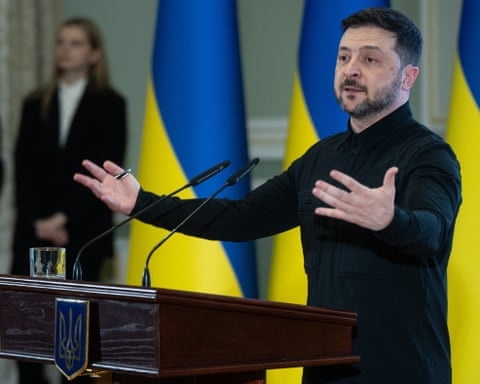
Kyiv and Washington have reportedly reached a significant alignment on a proposed framework to end the ongoing conflict, though the ultimate response from Moscow remains a critical unknown. The development follows intense diplomatic efforts and represents a notable evolution from earlier drafts of the plan.
Under the latest terms, Ukraine has agreed in principle to the establishment of a demilitarized zone within its eastern territories, a long-contested issue. This concession is conditional upon Russia committing to a symmetrical withdrawal of its military forces from specified areas. The proposal has been formally transmitted to Russian leadership for consideration.
While the Kremlin has acknowledged receipt of the document, officials stated a response is being prepared and declined immediate public comment. Russian demands have previously centered on Ukrainian territorial concessions in the Donbas region and a formal renunciation of NATO membership ambitions.
The current framework, however, involves a series of complex trade-offs. In exchange for security guarantees from the United States and European allies—modeled on the principle of collective defense—Kyiv appears prepared to formally set aside its pursuit of NATO membership. The plan also outlines a withdrawal of Russian troops from several regions and proposes an international monitoring force along the contact line.
Ukrainian leadership has framed the proposal as strengthening its diplomatic position, suggesting that a Russian rejection could trigger enhanced military support and further sanctions from Western partners. Any final agreement requiring Ukrainian troop movements would be subject to a national referendum, according to statements from Kyiv.
A major point of uncertainty is whether Russia would accept any arrangement that does not grant it full control over the Donetsk region or that mandates its own military pullback. Other unresolved issues include the future operational control of key infrastructure sites.
The diplomatic push continues against a backdrop of relentless hostilities. The conflict, now in its fourth year, has resulted in massive casualties, widespread destruction, and a severe humanitarian crisis, with frontline fighting and attacks on civilian infrastructure persisting.