As a deep freeze grips central Europe, Poland’s premier football competition is set to resume in arctic conditions. The restart symbolizes more than just a return to play; it marks the continuation of what has become one of the continent’s most compelling and tightly-contested leagues.
The current campaign is defined by its remarkable parity. A mere four points separate the top eight teams, with even the side at the foot of the table remaining within striking distance of the leaders. This unpredictability is fueling excitement and drawing increased attention to a division that appears to be reaching a new level of maturity and ambition.
Observers point to a confluence of factors driving this ascent. A strengthened national economy has provided a foundation, while the modern stadiums built for the 2012 European Championship continue to set a high standard for matchday experience. Crucially, the league is witnessing a shift in ownership, with a majority of clubs now under private, often local, business ownership, fostering a more strategic and competitive approach.
“This is a physical, intense competition,” noted one club executive. “The technical quality is rising, and it’s increasingly seen as a destination for development, not just a final stop for players.”
This perception is bolstered by significant transfers, including multi-million euro signings of promising young talents from abroad, signaling a growing financial capability and appeal. The success of Polish clubs in UEFA’s Europa Conference League has also provided a vital boost, enhancing the league’s coefficient and proving its teams can compete on the European stage.
The ultimate ambition, however, stretches further. There is a growing belief within Polish football that the league has the potential to challenge for a place among Europe’s top six divisions. The path to that goal is seen not through creating a domestic duopoly, but by cultivating a broad base of competitive clubs capable of consistent European performances.
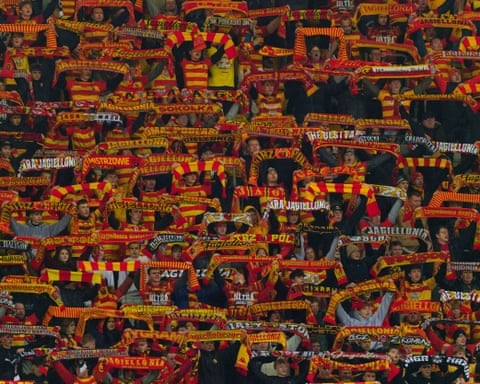
Fan engagement is a central pillar of this growth. Average attendances have surged by thousands over the past decade, transforming once-notorious venues into vibrant, family-friendly arenas. Clubs are forging deeper ties with their communities, and with rising disposable incomes, football is capturing a greater share of the entertainment market.
The next challenge lies in fully capitalizing on this momentum, particularly in media rights valuations, where there is acknowledged room for growth compared to other mid-sized European leagues.
As the season enters its decisive phase, the only certainty is the drama that lies ahead. The fierce competition on the pitch, combined with strategic growth off it, suggests Poland’s top flight is not just enjoying a moment in the sun, but building a foundation for a much brighter future.