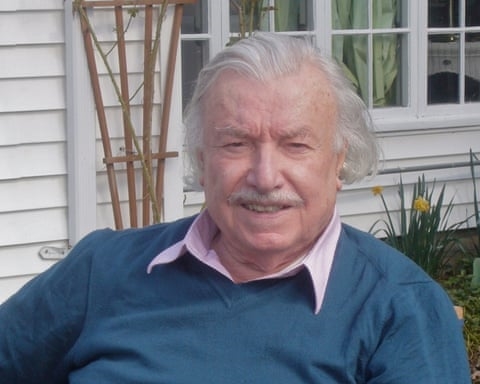
Walid Khalidi, a foundational scholar and intellectual whose work fundamentally altered the historical understanding of the Palestinian exodus and who was instrumental in steering the Palestinian national movement toward a two-state solution, has died at the age of 100.
Khalidi’s academic career, spanning prestigious institutions in Beirut, the United States, and Britain, was marked by rigorous scholarship that challenged long-standing narratives. His seminal research documented the circumstances surrounding the displacement of hundreds of thousands of Palestinians in 1948, presenting evidence that countered claims they left primarily due to orders from Arab leaders. Instead, his work highlighted the impact of military operations, bringing the Palestinian historical perspective to the forefront of academic discourse.
Among his most influential publications are Before Their Diaspora, a visual chronicle of Palestinian society before 1948, and All That Remains, a meticulous record of villages depopulated or destroyed during that period. These works remain essential references on the subject.
Beyond academia, Khalidi was a key political figure. In 1963, he co-founded the Institute for Palestine Studies in Beirut, an independent research center that continues to be a leading voice on the conflict. His influence extended into diplomacy, where he worked to build bridges between Palestinian leaders and international policymakers. In a landmark 1978 article, he laid out a detailed vision for a Palestinian state alongside Israel, a position that was controversial at the time but which later became central to official Palestinian strategy and international peace efforts.
Born in Jerusalem in 1925 into a prominent family, Khalidi was educated in a milieu that blended Arab, Western, and Jewish intellectual currents. Fluent in both classical Arabic and English, his worldview was shaped by the 1948 war and a deep commitment to the Palestinian cause, which he pursued through a combination of scholarly rigor and pragmatic politics.
He maintained that U.S. engagement was crucial to any resolution and cultivated relationships with American officials. While he was a close advisor to Palestinian leaders, including Yasser Arafat, he maintained an independent stance, notably opposing Iraq’s 1990 invasion of Kuwait.
Despite the fading prospects for a two-state solution in his later years, Khalidi remained a steadfast advocate for it until his death. He is survived by his two children. His legacy endures as that of a historian who documented a nation’s loss and a strategist who tirelessly worked for its political future.