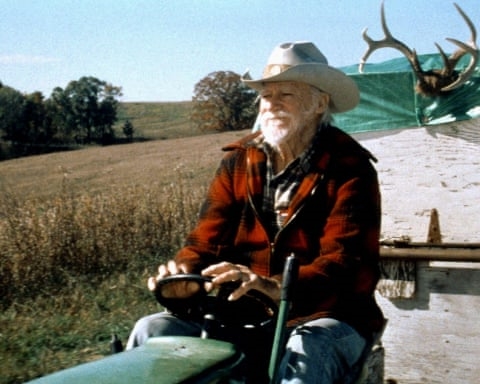
In 1999, a film arrived that felt like a detour, a quiet, sun-dappled side road taken by a director famed for navigating darker, more surreal highways. It is a film built on a simple, true premise: an elderly man, facing his own frail health, learns his estranged brother has fallen ill. Unable to drive a car and unwilling to take a bus, he makes an improbable decision. He hitches a trailer to his riding lawn mower and sets out across the heartland to make peace, covering hundreds of miles at a pace that allows the landscape to seep into the soul.
This narrative is told with a profound simplicity that feels almost radical. Gone are the unsettling shadows and twisted dream logic that often define the director’s work. In their place is a steadfast focus on human decency, the kindness of strangers, and the weight of unspoken history. The visual language trades frenetic energy for lingering, pastoral compositions—fields of corn, vast skies, and the hypnotic, steady crawl of a yellow highway line passing beneath the mower’s wheels. The score, too, swaps dissonance for a melancholic, folk-tinged beauty that underscores the journey’s solemn purpose.
The central performance is a masterclass in quiet dignity. The actor embodies Alvin with a weathered, stubborn grace, his physical struggles—leaning heavily on two canes, each breath a conscious effort—speaking volumes about a lifetime of habits and hard choices. His pilgrimage is not one of dramatic self-discovery, but of steadfast resolution. He meets people along the way: a runaway, a fellow veteran, everyday folks who offer help without hesitation. These encounters are not quirky vignettes but genuine moments of connection, reflecting a community’s unspoken code.
There is a powerful tension in watching this vulnerable figure putter along busy highways, a mobile hazard with a tank of gasoline in tow. Yet the film presents a world where institutional intervention is absent; the journey is allowed to proceed on its own terms, as a personal right. The climax is not a dramatic confrontation, but a wordless reunion, all the more powerful for its silence and the sheer magnitude of effort it required.
Upon release, some may have been disarmed by its gentle pace and lack of stylistic signature. Viewed today, its power lies precisely in that restraint. It is a film about mortality, regret, and the stubborn, beautiful impulse to mend fences while there is still time, told not with fireworks, but with the slow, sure rhythm of a piston engine and the vast, forgiving light of the American Midwest. It stands as a poignant, deeply moving testament to the idea that the most epic journeys are often measured not in speed, but in spirit.