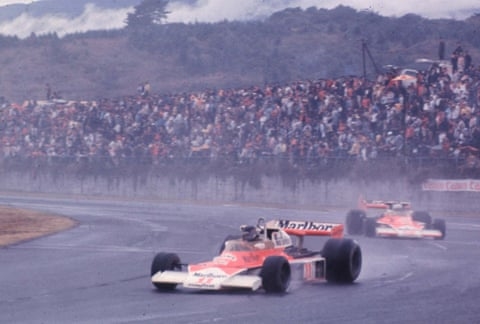
The 1976 Formula One season culminated in a finale that has become the stuff of legend. The championship battle between James Hunt and Niki Lauda arrived at Japan’s Fuji Speedway with everything on the line, set against a backdrop of torrential rain and profound personal courage.
Their rivalry was intense, yet marked by a deep mutual respect. Lauda would later reflect on Hunt as a genuine friend, a sentiment that underscored a fierce sporting contest. The season had been fractious, marred by technical disputes between their teams, Ferrari and McLaren. Lauda had held a commanding lead until a horrific, near-fatal crash at Germany’s Nürburgring sidelined him. His return to the cockpit just weeks later, badly scarred, was itself a monumental feat of determination. By the time the grid assembled in Japan, Hunt had closed the gap to a mere three points.
The setting for the decider was far from ideal. A fierce storm lashed the circuit, reducing visibility and flooding the track. The start was delayed as officials debated the safety of proceeding. Amid the unbearable tension, Hunt’s pre-race nerves were palpable, while Lauda assessed the perilous conditions with characteristic pragmatism.
When the race was finally green-flagged, largely due to television commitments, Lauda made a decision that defined his legacy. After completing a single exploratory lap, he parked his Ferrari, declaring the conditions unacceptable. The championship was now Hunt’s to lose, provided he could finish fourth or better.
Hunt seized the lead at the start, but his path to the title was fraught. As the rain eased and a dry line emerged, a miscommunication over tyre management led to a late-race puncture. A frantic, agonisingly slow pit stop—a far cry from today’s choreographed routines—dropped him to fifth with only a handful of laps remaining.
What followed was a desperate, brilliant charge. In the final moments, Hunt overtook two rivals to climb back to third place. Unaware he had done enough, he returned to the pits fuming, only for his team principal to finally break through with the news: he was the world champion by a single point.
In victory, Hunt’s first thought was for his rival. He publicly affirmed Lauda’s decision to withdraw, calling the initial start “madness” but admitting he was glad it proceeded. It was a poignant end to a season defined by extreme drama, a testament to two vastly different characters whose battle transcended the sport.