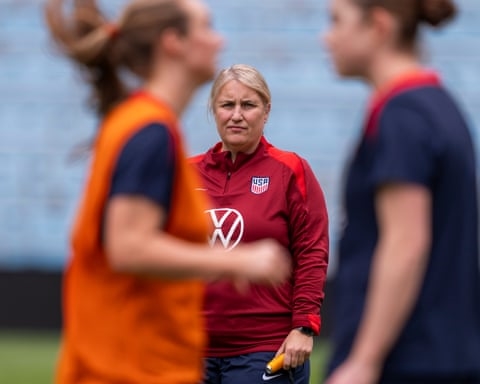
The upcoming SheBelieves Cup marks a distinct new chapter for the United States Women’s National Team under head coach Emma Hayes. As the squad prepares to face Argentina, Canada, and Colombia, the focus has visibly shifted from broad experimentation to targeted refinement, signaling the next stage of preparation for the 2027 World Cup.
This tournament roster is notable for what it lacks: uncapped players. This ends a prolific period where Hayes set team records for integrating new talent, handing out 32 debuts since taking charge. That phase was dedicated to expanding the player pool, fostering internal competition, and assessing options. Now, with World Cup qualifying on the horizon later this year, the objective is clarity and consolidation.
“You have to create competition, and to do that, you have to give people experiences,” Hayes stated recently, emphasizing that established roles are not guaranteed. “I expect more competition as a result of the decisions we took last year. But you’ve got to perform.”
Several key themes define this current period. First, strategic rotation within the starting lineup will continue, driven by both injuries to key players and the deliberate need to build experience across the broader squad. Hayes must balance developing a consistent core—like center-backs Naomi Girma and Emily Sonnett—with deepening the readiness of the less-capped players behind them.
Despite the absence of debutants, this remains a relatively young group. Outside of a handful of veterans, most players have fewer than 42 caps, with 12 boasting 10 or fewer. Hayes’s mandate is to ensure this entire group gains valuable experience before the World Cup. “If I just selected 14 players all the time,” she noted, “I genuinely think I’d be failing in this job.”
Perhaps the most compelling storyline is the intense competition for starting positions across the pitch. The goalkeeper role appears open. In attack, while established stars are sidelined, a deep reservoir of talent ensures no drop in quality. The midfield, crowded with dynamic options like Sam Coffey, Jaedyn Shaw, and Rose Lavelle, promises to be a particularly competitive and fascinating area.
The SheBelieves Cup itself offers valuable tests. Colombia brings technical skill and physicality, Argentina seeks improvement, and rival Canada arrives looking to rebound after a challenging 2025. For the US, the tournament is a critical step in honing a cohesive unit, as they aim to reclaim the title they last won in 2024. The era of experimentation is over; the process of perfecting has begun.