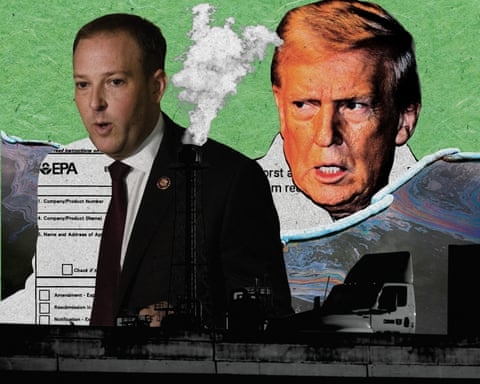
A series of nearly 70 regulatory actions taken by the federal Environmental Protection Agency (EPA) over the past year is drawing sharp criticism from public health and environmental experts, who warn the moves threaten air and water quality, increase exposure to hazardous chemicals, and will significantly worsen global warming.
The pace and scope of the changes represent a fundamental shift in the agency’s direction, according to analysts. “This is a comprehensive assault on the safeguards that protect our communities and our environment,” stated a former senior official within the agency’s environmental justice office. “The intent appears to be to hollow out the agency’s capacity to function.”
An independent tally, based on data from a major environmental organization, confirms the agency has initiated, on average, more than one action per week to roll back or weaken existing rules. These actions span a wide spectrum, from granting exemptions to major polluters and closing key research offices to initiating the repeal of the foundational legal determination that empowers the government to regulate climate-warming emissions.
Agency leadership has defended its agenda, framing it as a necessary correction to what it calls “economy-crushing” overregulation and a return to a stricter interpretation of its legal duties. “We are committed to protecting human health and the environment while freeing American industry from burdensome, ineffective mandates,” an agency spokesperson said.
Critics strongly dispute this characterization. “The agency has effectively abandoned its core mission,” said a former policy advisor. “It is now operating in a manner that prioritizes polluter interests over public health.”
The potential impacts are widespread, focusing on four key areas:
Air Quality: Recent agency decisions are projected to lead to increased air pollution. Officials have streamlined the process for industrial facilities to obtain exemptions from Clean Air Act standards. Analyses indicate exemptions have been offered to a significant portion of the nation’s coal plants and other major industrial polluters. In a controversial procedural shift, the agency has also ceased accounting for the economic value of lives saved when regulating deadly particulate matter and ozone, focusing solely on compliance costs for industry. “This isn’t a typical regulatory swing; it’s dismantling the mechanism itself,” noted one expert.
Water Safety: Protections for the nation’s waterways are also being scaled back. The agency has moved to narrow the definition of which waters fall under federal protection, a change that would ease restrictions on pollution runoff from agriculture and industry. It is also revisiting wastewater standards for power plants meant to limit discharges of arsenic, mercury, and lead. Furthermore, the agency is reconsidering federal limits on a class of pervasive “forever chemicals,” known as PFAS, which are linked to serious health issues. This includes proposing the repeal of several national drinking water standards for these contaminants.
Toxic Chemicals: The agency is working to loosen regulations on several hazardous substances. It plans to cancel millions in grants for research on toxic threats to children and is revising the methodology for evaluating chemical risks in a way critics say will underestimate dangers. The agency has also moved to reverse long-standing positions on the safety of chemicals like formaldehyde and has delayed a ban on most uses of methylene chloride, a toxic solvent. “They are systematically undermining the scientific foundation of chemical safety,” asserted a former member of the agency’s scientific advisory board.
Climate Crisis: Perhaps the most far-reaching action is the proposal to repeal the 2009 “endangerment finding,” the legal cornerstone for all federal climate regulations. Its revocation would nullify existing rules on greenhouse gases. Concurrently, the agency is moving to repeal or gut emissions standards for vehicles and power plants, the nation’s two largest sources of climate pollution. It has also announced delays in enforcing regulations on methane, a potent greenhouse gas. These efforts are compounded by the shuttering of internal offices dedicated to climate research and the removal of climate-related information from government websites.
“The cumulative effect of these deregulatory actions, staff reductions, and research cuts is a severe degradation of the agency’s ability to perform its duties,” explained a climate law analyst.
While the administration maintains its policies will yield a cleaner environment alongside economic growth, a broad coalition of health professionals, scientists, and legal experts warn the trajectory poses a direct and escalating risk to public health and the global climate system.