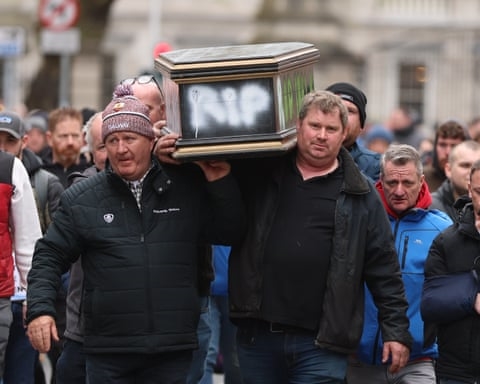
Widespread demonstrations over soaring fuel costs have led to significant supply disruptions and transportation blockades in Ireland, with similar protests emerging in Norway. The unrest, linked to global market volatility following recent Middle Eastern conflict, has prompted government warnings and emergency measures.
In Ireland, authorities have urged motorists to avoid panic buying as reports indicate approximately 100 service stations have exhausted their fuel supplies, with warnings that number could multiply. For a fourth consecutive day, convoys of trucks and tractors have obstructed major motorways and key areas of Dublin, bringing traffic to a halt.
The Irish government has placed the military on standby to assist in clearing blockades, while police have warned protesters to disperse. Officials have condemned the actions, stating the blockades are endangering essential supplies and illegally holding the nation “to ransom.” Talks between government ministers and industry representatives concluded without an immediate resolution, with discussions set to continue.
The price of diesel in Ireland has recently surged from approximately €1.70 to over €2.17 per litre, with petrol seeing a similar sharp increase. Despite a recently announced €250 million support package aimed at mitigating costs for hauliers and consumers, protest spokespersons demand more substantial and immediate reductions, vowing to continue demonstrations for weeks if necessary.
The ripple effects have reached Norway, where truck drivers participated in a “diesel roar” protest, driving a convoy toward the parliament in Oslo. Although Norway, a major oil producer, implemented a fuel tax cut at the start of April, industry groups argue prices remain unpredictably high. Official statistics note the sharpest monthly fuel price increase on record, surpassing even spikes witnessed during the initial phase of the Ukraine conflict.
The global context points to a sharp rise in oil prices following military actions in the Middle East last month, straining consumers and businesses worldwide. Several nations have responded with temporary tax cuts or measures to ensure fuel distribution. The situation underscores the broader economic pressures facing Europe, as governments balance market forces with public discontent over living costs.