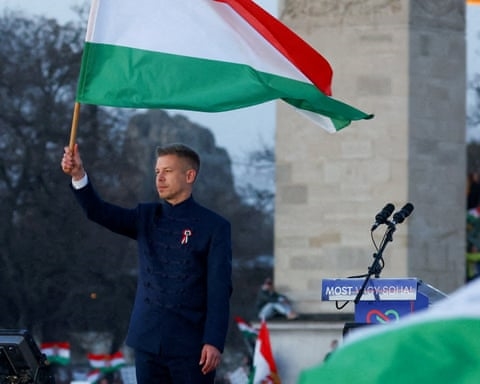
A new political force has rapidly ascended in Hungary, presenting the most significant electoral challenge to Prime Minister Viktor Orbán in years. At its center is Péter Magyar, a 45-year-old former diplomat whose personal and professional history is deeply intertwined with the ruling party he now seeks to unseat.
Magyar’s political journey is unconventional. He once served within Orbán’s Fidesz party apparatus, holding diplomatic and state roles, and was married to a former Fidesz justice minister. His dramatic break with the establishment came in early 2024, following a controversial presidential pardon in a child abuse case that triggered high-level resignations. Magyar publicly denounced the move, accusing party leaders of hypocrisy and shifting blame, which propelled him into the national spotlight.
Capitalizing on widespread public frustration over the cost of living, perceptions of systemic corruption, and strained relations with the European Union, Magyar founded the Tisza party. His message, delivered at a relentless pace of rallies across the country, frames Fidesz as a self-serving political enterprise that has enriched a few at the expense of ordinary citizens. This narrative has resonated, drawing large crowds and translating into leading poll numbers for his nascent movement.
Observers note the movement’s velocity is unprecedented in post-communist Hungary. “We have never seen a party rise this quickly,” stated a political analyst based in Budapest. Supporters describe a palpable energy at his events, a sign of mobilizing a previously apathetic electorate.
Yet, Magyar remains a figure of both intense enthusiasm and lingering skepticism. His insider background is a double-edged sword: it grants him unique credibility to critique the system but also raises questions about his past associations and ultimate intentions. Some voters express cautious support, viewing a vote for Tisza as a necessary gamble to disrupt the political status quo. “He is not a saint, but change is desperately needed,” remarked one voter, echoing a sentiment heard among his base.
Policy specifics from Magyar remain broadly outlined. His platform pledges to restore democratic institutions, rebuild trust with the EU to access frozen funds, and combat corruption. On foreign policy, he suggests a pragmatic approach, indicating he would maintain Hungary’s current stance against sending weapons to Ukraine while seeking to end the diplomatic gridlock with Brussels that has characterized Orbán’s recent tenure. On some domestic social issues, however, he has remained notably silent.
A major question hangs over the campaign: even if victorious, what could a Tisza-led government realistically achieve? After 16 years in power, Fidesz has profoundly reshaped the state’s institutions, media, and judiciary. Furthermore, enacting constitutional changes requires a two-thirds parliamentary majority, a high bar that may limit any new government’s scope for action.
Despite these uncertainties, for a significant portion of the Hungarian electorate, Magyar represents the most viable vehicle for political change. As one longtime opposition figure noted, the public has seemingly accepted the contradictions he embodies. “There are both question marks and exclamation marks around Péter Magyar,” he said. “But Hungarian society has accepted this.” The coming vote will determine if this acceptance translates into a historic political shift.