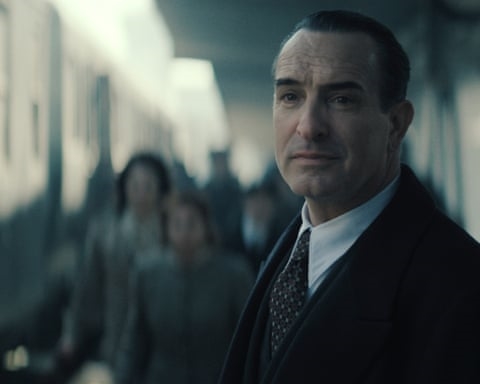
A new French film exploring the life of a prominent journalist who became a key propagandist for the Nazi occupation regime has ignited intense discussion about memory, collaboration, and historical responsibility. The ambitious drama, titled Les Rayons et les Ombres (Rays and Shadows), examines the seductive path to betrayal through the lens of a father-daughter relationship shattered by war.
The narrative unfolds through the postwar recollections of Corinne Luchaire, a once-celebrated actress whose star faded after the Liberation. As she records her memories, she grapples with the legacy of her father, Jean Luchaire, a charismatic press magnate executed for treason. Her carefully maintained illusions are shattered when a former Jewish colleague confronts her with the brutal consequences of the regime her father served.
Since its release, the film has attracted significant audiences despite its substantial runtime, but critical reception has split along ideological lines. Praise has centered on the project’s nuanced approach to a complex historical period, while some voices have accused it of softening the image of those who actively enabled oppression.
The director, who spent years developing the screenplay, states his intention was to map the psychological traps of fear and opportunism that can lead individuals into complicity. The film traces Luchaire’s evolution from a pacifist intellectual in the 1930s to a central figure in the Vichy propaganda apparatus, suggesting his downfall was driven as much by personal weakness and moral ambiguity as by fervent ideology.
Central to the story is Luchaire’s fateful relationship with Otto Abetz, the German ambassador to France. Their bond, initially forged around shared pacifist ideals, ultimately provides the architecture for a devastating propaganda alliance. The film portrays the corrupting allure of power and luxury available to the collaborating elite, depicting a world of embassy parties and lavish banquets that existed in stark contrast to the deprivation of occupied France.
The casting of a widely admired actor in the role of Luchaire was a deliberate choice to embody the character’s dangerous charm and social magnetism. The performance aims to illustrate how betrayal can often wear a pleasing face, making it all the more insidious.
The project enters a cinematic landscape where the subject of French collaboration has long been fraught. For decades, a dominant national narrative emphasized resistance, making detailed examinations of complicity a sensitive undertaking. The director acknowledges the profound unease that accompanied the filming process, aware of the deep wounds the history still touches.
Historical experts have engaged with the film’s interpretations. One prominent scholar of the period contends that Luchaire’s trajectory was less about corrupted idealism and more rooted in a lifelong pattern of amoral opportunism and financial venality, noting his early estrangement from former allies. The scholar also questions the depiction of his daughter’s postwar life as one of unrelenting victimhood, pointing to her published memoirs and their subsequent adoption by certain political circles.
The filmmaker describes the core challenge as navigating a narrow path between historical fascination and moral judgment. In consultations during production, he was cautioned that the subject matter carried a heavy burden: the risk of distortion lies in both simplification and in confronting uncomfortable truths too directly. The film ultimately stands as a provocative inquiry into the mechanisms of moral failure and the enduring shadows cast by history.