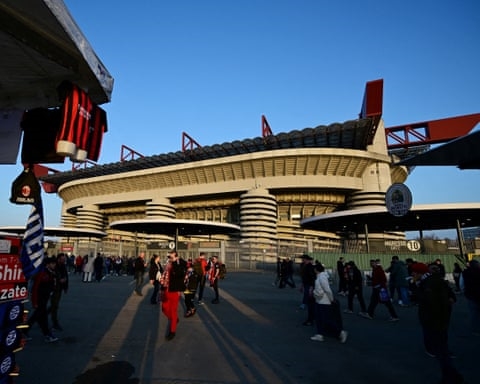
The president of European football’s governing body has issued a stark ultimatum to Italy, stating the nation’s co-hosting role for the 2032 European Championship is under serious threat due to the poor state of its sporting venues.
In a recent interview, UEFA President Aleksander Ceferin expressed grave concerns, labeling Italy’s football infrastructure as among the most deficient on the continent. He emphasized that while the tournament itself is confirmed, its location is not guaranteed. “I simply hope the infrastructure will be ready,” Ceferin stated. “If that is not the case, the tournament will not be held in Italy.”
The official directly linked the issue to political inaction, suggesting Italian authorities must confront why stadium development has lagged so severely behind other European nations. The core problem, according to Ceferin, lies in the fraught relationship between football’s governing bodies and the political establishment.
Italy is scheduled to co-host the event with Turkey. A critical deadline looms this October, by which time Italian officials must designate the five stadiums that will stage matches. A list of eleven candidate cities has been proposed, but assessments reveal a significant shortfall in readiness.
Reports indicate that among all potential venues, only one—Turin’s Allianz Stadium—is currently deemed fully prepared to host a major international tournament. This has precipitated a scramble for renovation and construction projects across the country.
In Milan, the clubs Inter and AC Milan have acquired the historic San Siro and plan to replace it with a new 71,500-seat arena on the same site, targeting completion by 2031. However, this project faces legal scrutiny over allegations of irregularities in the land sale process.
Other major initiatives include AS Roma receiving preliminary approval to build a new stadium in the Italian capital, a redevelopment plan for Fiorentina’s Stadio Artemio Franchi, and a proposed €200 million renovation of Napoli’s Stadio Diego Armando Maradona. The Naples project, which includes removing the stadium’s athletic track, has been framed by city officials as a necessary modernization independent of the European Championship.
This infrastructure crisis coincides with a period of turmoil for Italian football administration. The president of the Italian Football Federation has resigned following the national team’s failure to qualify for a third successive World Cup, a move that also casts uncertainty over the future of the head coach.
The combined pressure of administrative upheaval and the urgent need for stadium modernization presents a formidable challenge for Italian football, with its status as a host for a premier international event now hanging in the balance.